 Save Pin
 My aunt's kitchen smelled like fresh dill and butter the morning of every Derby party, and I'd find her at the counter with a grating board and a stack of thin white bread, moving with the practiced ease of someone who'd made these sandwiches a hundred times before. She'd catch me sneaking a taste of the cucumber spread and laugh, saying these little sandwiches were more about the ceremony than the hunger—they were how you said welcome to people who mattered. Now when I make them, I understand what she meant; there's something about assembling something so delicate and precise that slows you down, makes you present.
The first time I served these at a gathering that mattered—a spring bridal shower where I was desperately trying to impress—I watched my friend reach for her third one and then pause, turning to ask for the recipe. That small moment, someone wanting to recreate something you'd made, taught me that hospitality isn't about perfection; it's about showing up with something made by your own hands.
Ingredients
- English cucumber: Peeled, seeded, and finely grated—the whole point is to extract every drop of flavor while managing the moisture that would otherwise turn your spread into soup.
- Cream cheese, softened: Room temperature is non-negotiable here; it blends smooth without lumps and accepts the cucumber's moisture evenly.
- Mayonnaise: Just enough to add richness and help the spread hold together, but not so much that you lose the delicate taste.
- Fresh dill and chives: These aren't garnishes, they're the soul of the spread—use them fresh, chop them fine, and don't substitute with dried unless you have no choice.
- Lemon juice: A teaspoon seems small until you taste how it wakes up all the herb flavors and prevents the spread from feeling flat.
- Salt and white pepper: White pepper keeps the spread looking pristine for fancy occasions, though black works just fine if that's what you have.
- Soft white and wheat bread: The contrast between white and wheat slices is traditional and looks beautiful on a plate, but any soft bread works—avoid anything too dense or seedy.
Tired of Takeout? 🥡
Get 10 meals you can make faster than delivery arrives. Seriously.
One email. No spam. Unsubscribe anytime.
Instructions
- Squeeze every drop from your cucumber:
- Wrap the grated cucumber in a clean kitchen towel and press it hard over the sink—this step determines whether your spread will be creamy or watery, so don't rush it. You'll be surprised how much liquid comes out.
- Build your base:
- Combine the softened cream cheese, mayonnaise, dill, chives, lemon juice, salt, and pepper in a bowl, stirring until the mixture is completely smooth and no streaks of cream cheese remain. Taste it now and adjust the seasoning; this is your only chance before you fold in the cucumber.
- Fold in the cucumber gently:
- Add the squeezed cucumber to the cream cheese mixture and fold it in using a spatula, being careful not to overwork the spread or it becomes grainy. Stop as soon as everything is evenly combined.
- Spread and assemble with intention:
- Lay out your bread slices, applying a generous but even layer of the spread to half of them—don't be stingy, but don't let it ooze out the sides either. Press the remaining bread slices on top, aligning the edges.
- Cut with confidence:
- Use a sharp knife dipped in water between cuts to slice the sandwiches diagonally or into fingers, wiping the blade clean each time for neat edges. The diagonal cut is traditional and shows off that soft bread.
- Finish and chill:
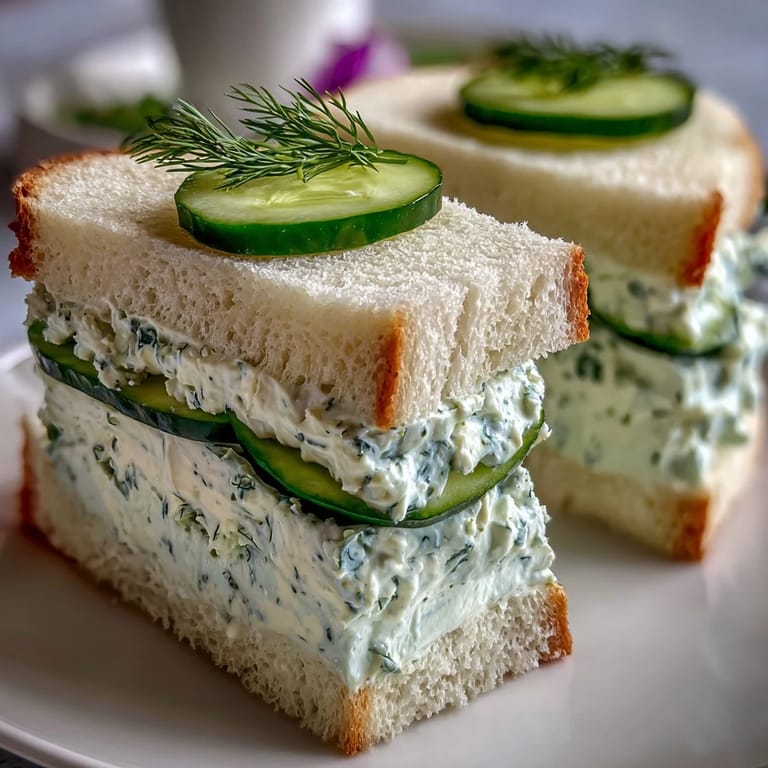
- Top with thin cucumber slices and fresh dill sprigs if you want them to look like they belong at a fancy event, then refrigerate until serving time. They taste even better cold.
 Save Pin
 There was a moment at a Derby party years ago when I watched three generations of women standing in the kitchen, all reaching for the same sandwich at the same time, and then laughing because they'd all done it. That's when I realized these aren't just sandwiches; they're a way of saying something without words.
The Cucumber Secret
Cucumber is mostly water, and that's its blessing and its curse—it brings a cool, clean taste that makes these sandwiches feel light and sophisticated, but if you don't remove that water, it'll destroy your spread's texture. My aunt taught me to squeeze the grated cucumber until my hands ached, and I thought she was dramatic until I tasted the difference. Now I do the same thing, and the spread stays creamy and spreadable instead of turning into a watery mess on the bread.
When to Make These
Derby Day is the obvious choice, but I've learned these sandwiches belong at any gathering where you want the food to whisper instead of shout—baby showers, bridal events, spring luncheons, or even just because it's sunny and you want to remind yourself that some pleasures are small and beautiful. They pair perfectly with iced tea or champagne, and they always disappear faster than you'd expect, even though guests swear they're watching what they eat.
The Presentation That Matters
Traditional Benedictine spreads are tinted pale green with food coloring, and while that's lovely to look at, I've found that people care more about how the sandwich tastes than whether it looks like it came from a Southern garden party catalog. Still, there's something satisfying about adding a tiny pinch of green to make it official, and it does signal to guests that you've thought about tradition and detail.
- A thin cucumber slice and a dill sprig on top turns these from snacks into something that looks intentional and cared for.
- The diagonal cut isn't just tradition; it actually makes the sandwich easier to hold and eat without making a mess.
- Serve them chilled on a platter lined with parchment, which lets people see the sandwich and protects your serving dish from any moisture.
 Save Pin
 These sandwiches remind me that sometimes the best things on a table are the simple ones, made with care and served without apology. Make them for people you like, and watch how something so small becomes part of how they remember you.
Recipe FAQs
- → What type of bread works best for these sandwiches?
Soft white and wheat sandwich breads with crusts removed are ideal for a tender bite and balanced texture.
- → How do you prepare the cucumber for the spread?
The cucumber should be peeled, seeded, finely grated, and squeezed dry to prevent sogginess in the spread.
- → Can I substitute the herbs in the spread?
Yes, fresh parsley can be used instead of dill for a slightly different but still fresh flavor.
- → How should the sandwiches be stored before serving?
Store covered in the refrigerator for up to 4 hours to maintain freshness and prevent drying out.
- → Is there a way to enhance the traditional presentation?
Adding green food coloring to the spread creates a classic vibrant hue often seen in traditional versions.
- → Should the sandwiches be served warm or chilled?
These sandwiches are best served chilled to keep the spread fresh and maintain the texture of the bread.