 Save Pin
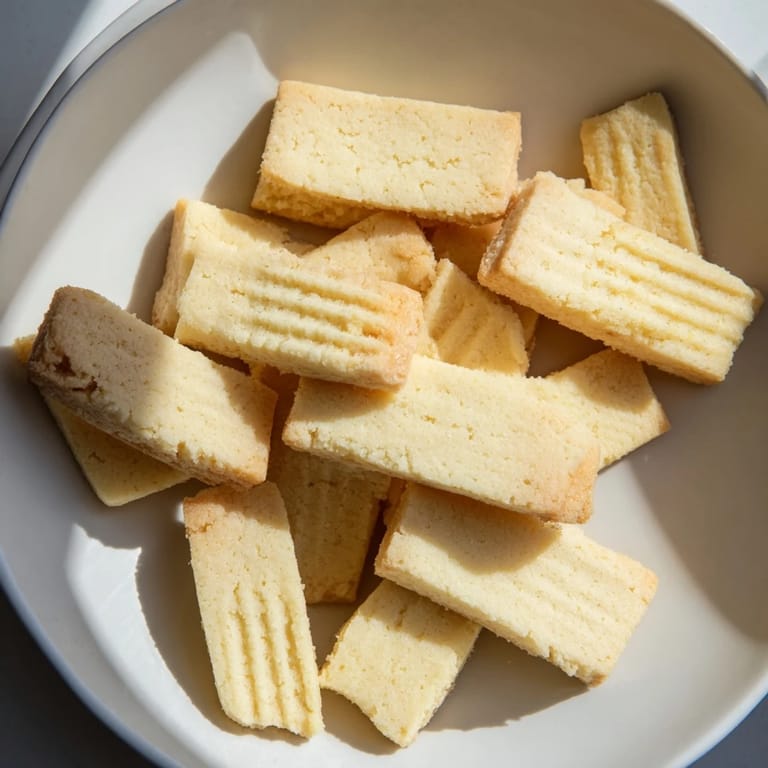
 My grandmother kept a tin of shortbread on the kitchen counter year-round, and I spent countless afternoons watching her press butter-soft dough into that worn baking pan. There's something almost meditative about it—the way your fingers work the dough into every corner, knowing that restraint is everything. She never let me mix it much, insisting that overworking would ruin the whole point: that crumbly, melt-on-your-tongue texture that makes you reach for just one more piece. I finally understood why when I made my first batch alone and got impatient with the mixing.
I brought a batch to my neighbor when she was recovering from surgery, and she told me later that eating one of these cookies while sitting in her garden was the first moment she felt like herself again. That's when shortbread stopped being just a cookie in my mind.
Ingredients
- Unsalted butter (1 cup, softened): This is the soul of shortbread—use good quality butter and let it soften completely so it creams smoothly without separating.
- Granulated sugar (½ cup): This amount keeps the cookies from being too sweet, letting the butter shine through.
- All-purpose flour (2 cups): The bulk of the structure; sifting prevents lumps and aerates slightly.
- Cornstarch (¼ cup): This is the secret to that tender, crumbly texture—it replaces some flour and weakens the gluten network.
- Fine sea salt (¼ tsp): A small pinch brightens the buttery flavor without making it taste salty.
Tired of Takeout? 🥡
Get 10 meals you can make faster than delivery arrives. Seriously.
One email. No spam. Unsubscribe anytime.
Instructions
- Heat your oven and prepare:
- Set the oven to 325°F and line your baking sheet or pan with parchment paper. This gentle temperature lets shortbread bake evenly without browning too fast.
- Cream the butter and sugar:
- Beat them together until pale and fluffy, about 2–3 minutes. You're incorporating just enough air to make the texture tender without being cakey.
- Combine dry ingredients gently:
- Sift the flour, cornstarch, and salt directly into the butter mixture. Stir until the dough just comes together—the moment you see no white streaks, stop mixing.
- Press into shape:
- If using a pan, press the dough in evenly with your fingertips. If shaping on a sheet, work it into a neat rectangle about ½-inch thick.
- Score and dock:
- Use a sharp knife to cut lines into the dough (creating wedges or fingers), then prick each section lightly with a fork. This lets heat penetrate evenly and helps the cookies break cleanly after baking.
- Bake with patience:
- Bake for 22–25 minutes until the edges are just pale golden. The center will look slightly underbaked, but it firms up as it cools—this is exactly right.
- Cool and cut:
- Let the shortbread rest in the pan for 5 minutes so it firms up enough to cut cleanly, then carefully separate along your scored lines.
 Save Pin
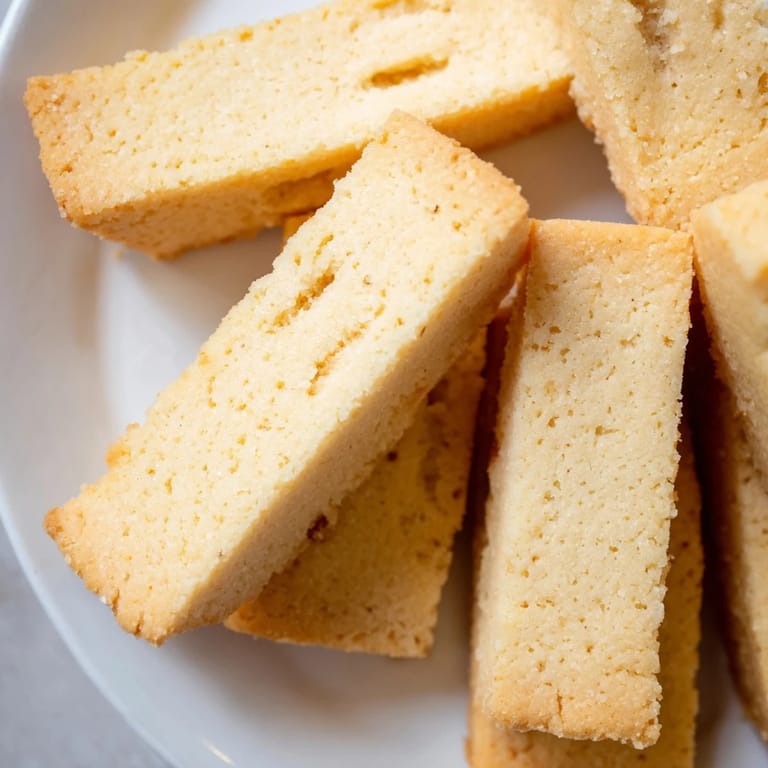
 My sister's son, who usually refuses homemade treats in favor of packaged snacks, ate three of these in silence and then asked if I could make them every week. It was the first time I realized that good ingredients and honest technique actually do matter to people, even when they don't expect them to.
Flavor Variations Worth Trying
Once you nail the classic shortbread, small additions transform it without losing that essential crumbly character. Citrus zest—lemon or orange—adds brightness without moisture; just add a teaspoon to the dough before mixing. For chocolate lovers, melting good dark chocolate and dipping the cooled cookies turns them into something more elegant, though I admit purists might protest.
Storage and Keeping
Shortbread stays crisp and delicious in an airtight container for up to a week, though I've never had a batch last that long. If you make a double batch and freeze the shaped, uncooked dough, you can bake fresh cookies straight from the freezer without thawing—just add a minute or two to the baking time.
Why This Recipe Works
The ratio of butter to flour is slightly higher than in most cookies, which is what creates that distinctive sandy, melt-in-your-mouth texture. The cornstarch is quietly doing the heavy lifting, weakening the gluten network so the cookies break apart on your tongue instead of chewy or crisp. The low baking temperature ensures everything cooks through gently without the edges hardening before the center sets.
- Measure your flour by spooning it into the cup and leveling off rather than scooping, which packs it down and makes the dough too dry.
- If your kitchen is very warm, chill the shaped dough for 15 minutes before baking so it holds its shape better.
- These cookies are best the day they're baked or the next day, when the texture is at its most tender.
 Save Pin
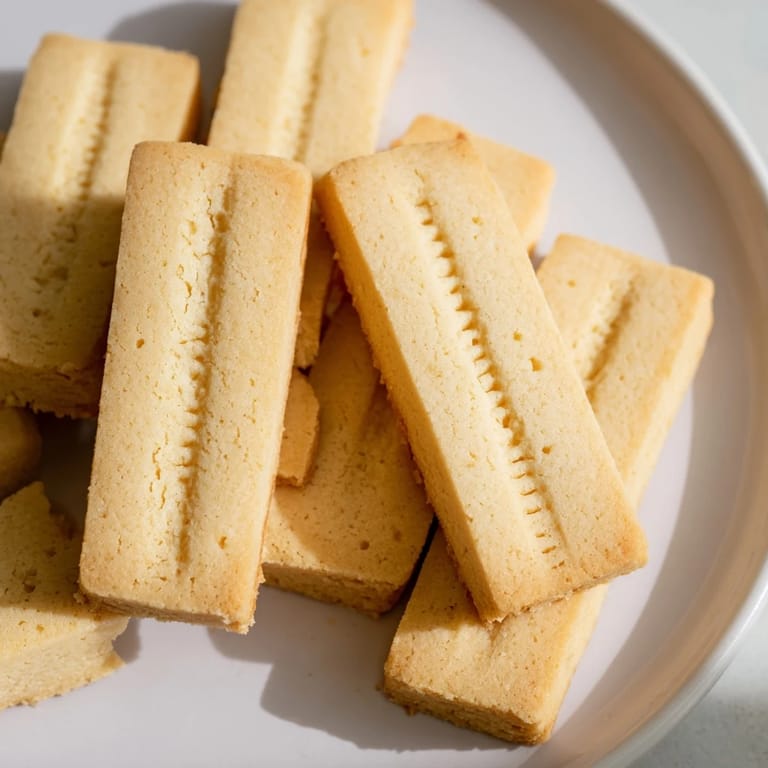
 Shortbread reminds me that the best recipes are often the simplest ones, where butter and restraint do all the talking. Make a batch this week and taste what happens when you give real ingredients room to shine.
Recipe FAQs
- → What makes these shortbread crumbly?
The combination of softened butter and cornstarch in the dough creates a tender, crumbly texture that melts on the tongue.
- → Can I add flavor variations to the dough?
Yes, adding finely grated lemon or orange zest provides a refreshing citrus twist to the buttery base.
- → What is the ideal baking temperature and time?
Bake at 325°F (160°C) for 22–25 minutes until the edges turn pale golden without browning for the best texture.
- → How should the dough be prepared before baking?
Press the dough evenly into a pan or shape into a rectangle on a baking sheet, then score into wedges or fingers and prick lightly with a fork.
- → How can I store leftover shortbread to maintain freshness?
Store cooled shortbread in an airtight container at room temperature for up to one week.
- → Are there any common allergens in this shortbread?
Yes, this shortbread contains dairy from butter and gluten from wheat flour, so take care if you have allergies.