 Save Pin
 There's something about the smell of meat sauce simmering on the stove that makes a kitchen feel like home. My mom used to make lasagna on Sunday afternoons, and the whole house would fill with this warm, tomatoey richness that somehow made everyone drift toward the kitchen without being called. Years later, I realized it wasn't just nostalgia—it was the promise of something deeply satisfying, the kind of food that sticks with you long after dinner ends.
I made this for my partner's family the first time I was invited to their house for dinner, and honestly, I was nervous. But something about the ritual of layering noodles and cheese, watching it bubble in the oven, felt like a conversation without words. When everyone went quiet after that first bite, I knew I'd done something right—and I've been making it ever since.
Ingredients
- Ground beef: The backbone of your sauce—I use a blend of lean and regular ground beef so it has enough fat for flavor without being greasy.
- Italian sausage: This is what gives the sauce its subtle spice and richness; don't skip it or use a substitute without thinking it through.
- Onion and garlic: These are your aromatics, and cooking them slowly until the onion turns translucent creates the foundation everything else builds on.
- Crushed tomatoes and tomato sauce: The crushed tomatoes give you texture while the sauce smooths everything out; together they're better than either alone.
- Tomato paste: A concentrated hit of umami that makes the whole sauce taste more complex and developed.
- Dried oregano and basil: These herbs need time to bloom in the simmering sauce, so don't add them at the last minute.
- Ricotta cheese: Creamy, mild, and perfect for binding with egg; it's what makes each layer feel luxurious.
- Mozzarella cheese: The melting magic—use whole milk mozzarella if you can, as it stretches and browns more beautifully.
- Parmesan cheese: Sharp and salty, it cuts through the richness and adds a savory punch.
- Lasagna noodles: Regular or no-boil both work; no-boil saves time but regular noodles give you slightly better texture if you don't mind the extra step.
Tired of Takeout? 🥡
Get 10 meals you can make faster than delivery arrives. Seriously.
One email. No spam. Unsubscribe anytime.
Instructions
- Get everything ready:
- Preheat your oven to 375°F and grease your baking dish—this is when you want to be organized because once the cooking starts, things move quickly. If you're using regular noodles, get them going now so they're ready when you need them.
- Build your aromatics:
- Heat olive oil in a large skillet and let your chopped onion soften slowly over medium heat, about 3 minutes. The slower this goes, the sweeter and more caramelized the onion becomes, which is exactly what you want.
- Add the garlic:
- After the onion has turned soft and translucent, add minced garlic and cook just 1 minute more—garlic burns fast and tastes bitter if you're not careful. You want it fragrant, not brown.
- Brown the meat:
- Crumble your ground beef and sausage into the skillet and break it up with a wooden spoon as it cooks, making sure no large chunks remain. You're looking for that deep brown color, which means the meat has developed flavor and is cooked through; drain off excess fat if there's a visible pool sitting on top.
- Build the sauce:
- Pour in both cans of tomatoes, the tomato sauce, tomato paste, and all your seasonings—oregano, basil, salt, pepper, sugar, and red pepper flakes if you like heat. Bring it to a simmer and let it bubble gently uncovered for 15 to 20 minutes, stirring occasionally so nothing sticks to the bottom.
- Make the cheese mixture:
- In a medium bowl, combine ricotta, egg, grated Parmesan, parsley, salt, and pepper, stirring until smooth and combined. This mixture should feel creamy, not lumpy.
- Assemble with care:
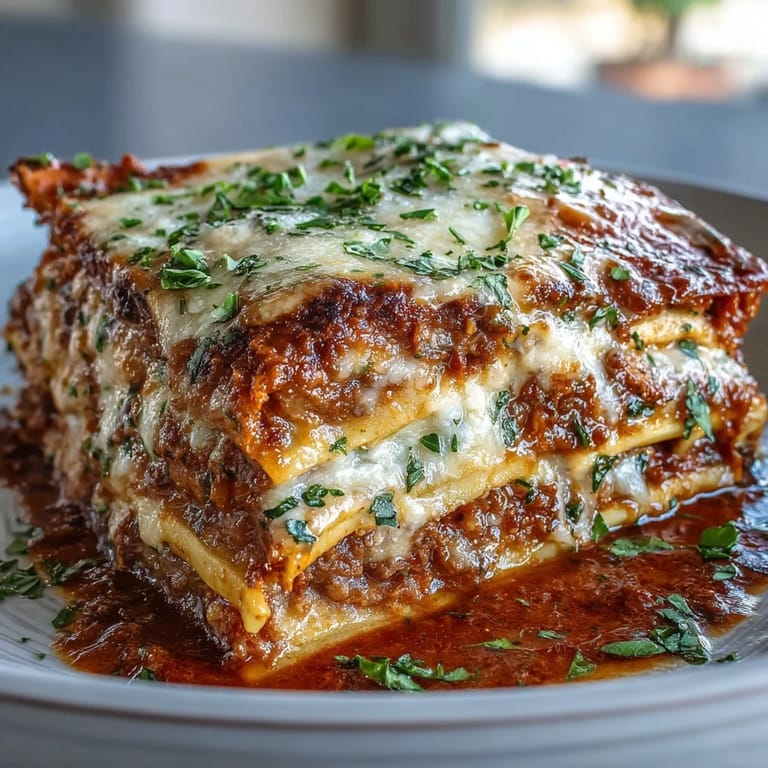
- Spread 1 cup of meat sauce across the bottom of your prepared baking dish—this prevents sticking and gives you a solid foundation. Lay 4 noodles across, then spread 1/3 of your ricotta mixture over them, add 1 cup of sauce, and sprinkle 1 cup of mozzarella.
- Repeat the layers:
- Do that same sequence two more times—ricotta, sauce, cheese—so you have three complete layers. Finish with the remaining sauce and mozzarella spread across the top so you get those golden, bubbly edges.
- Bake covered and uncovered:
- Cover the dish tightly with foil and bake for 25 minutes, then remove the foil and bake another 20 minutes until the cheese is bubbling and the edges are golden brown. The foil step keeps the top from drying out while the filling heats through.
- Rest before serving:
- This is important—let the lasagna sit for 15 minutes out of the oven before you cut into it. Those 15 minutes let everything set so you get clean slices instead of a saucy collapse.
 Save Pin
 There was a moment last winter when my friend came over after a rough day, and we made this together almost without talking. By the time it came out of the oven, something had shifted—the ritual of cooking it side by side had already done half the healing.
Why the Sauce Matters Most
The meat sauce is honestly where this dish lives or dies. I learned this the hard way by rushing it once, skipping that 15 to 20 minute simmer, and ending up with something that tasted flat and one-dimensional. That slow simmer lets the tomatoes break down, the herbs infuse into every drop, and the meat flavors meld into something rounded and complex. It's the difference between making lasagna and making lasagna.
The Cheese Layer Secret
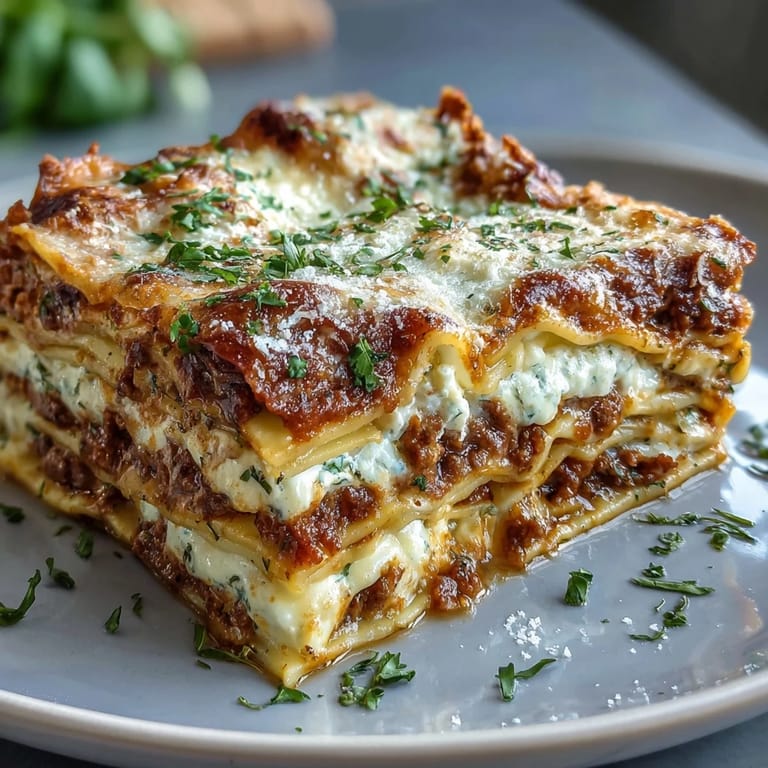
Most people think more cheese is always better, and while I'm not exactly disagreeing, the real magic is in how you distribute it. The ricotta layer is creamy insurance—it keeps everything moist and prevents dry spots—while the mozzarella on top is what gets golden and stringy. If you put all your mozzarella in the ricotta mixture, you lose that contrast, so respect the layers and let each cheese do what it does best.
Timing and Temperature
I used to second-guess myself about whether the lasagna was done, often pulling it out too early when the cheese was just barely melted. Then I learned to trust the visual cues—the edges should be bubbling actively, and the cheese on top should have some golden brown spots, not just be sitting there pale and flat. The whole process from oven to table takes about an hour and a half, which means you can start this early afternoon and have dinner ready by evening without stress.
- If your oven runs hot, check the lasagna at the 40-minute mark to make sure the top isn't browning too fast.
- Foil is your friend—it keeps the top from burning while the inside finishes cooking.
- Letting it rest is non-negotiable if you want slices that hold together.
 Save Pin
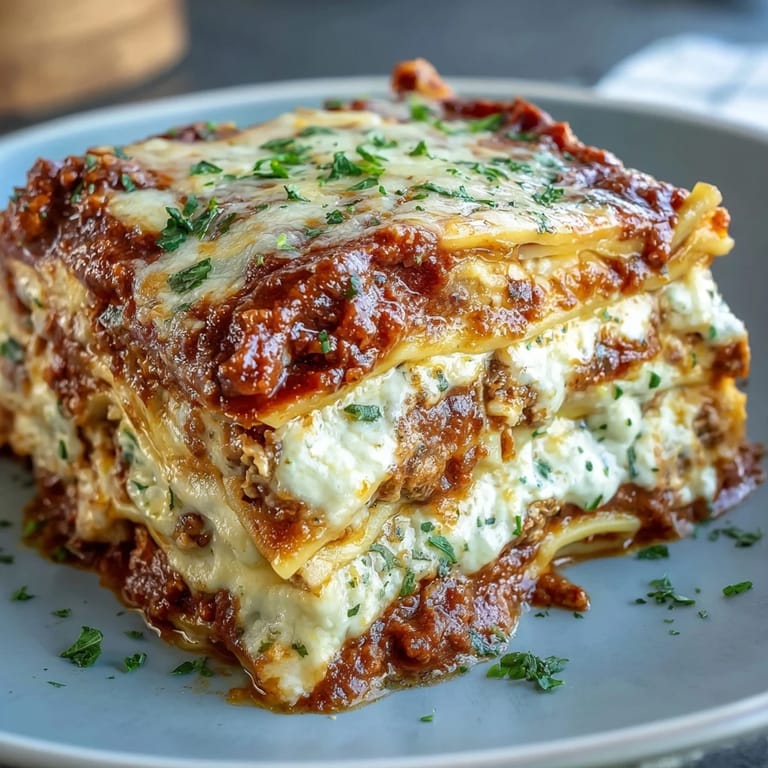
 This lasagna is the kind of food that reminds you why we cook for each other—it's straightforward enough that anyone can do it, but it tastes like you've been perfecting it for years. Make it once and you'll understand why people keep coming back to it.
Recipe FAQs
- → How do I prevent the noodles from sticking?
Boil the noodles until al dente, drain well, and rinse with cold water. Lightly oiling or using no-boil noodles can also help.
- → Can I prepare this dish ahead of time?
Yes, assemble the layers and refrigerate before baking. Bake when ready, adding extra time if baking from cold.
- → What cheeses are used in this dish?
Ricotta is mixed with Parmesan and parsley for the cheese layer, topped with shredded mozzarella for melting.
- → How can I make a lighter version?
Substitute ground turkey for beef and sausage, or omit meat entirely and add sautéed vegetables such as spinach and mushrooms.
- → Which herbs enhance the sauce's flavor?
Dried oregano and basil are stirred into the tomato-based meat sauce for a classic Italian flavor profile.