 Save Pin
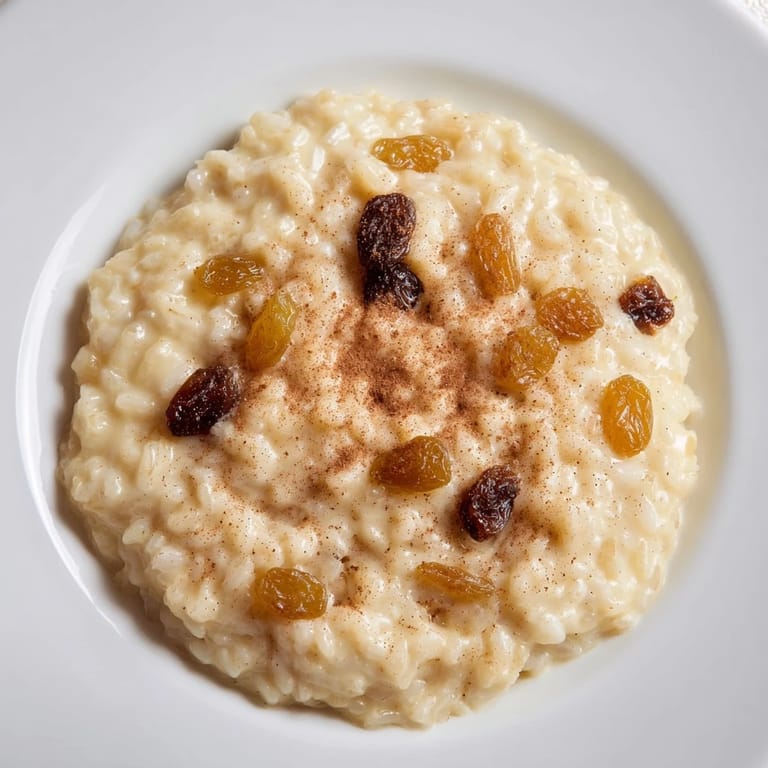
 My grandmother used to make rice pudding on Sunday afternoons, filling the kitchen with a warmth that had nothing to do with the oven. Years later, I realized it wasn't just nostalgia drawing me back to the recipe—it was the magic of watching separate ingredients transform into something creamy and luxurious through patience and gentle heat. The first time I made it myself, I expected complications, but instead discovered that rice pudding is one of those rare dishes that rewards restraint and simplicity. There's something deeply satisfying about a dessert that asks you to slow down, stir halfway through, and trust the process.
I made this for a dinner party once when someone mentioned they couldn't eat anything with wheat, and I remembered this recipe in a moment of panic-turned-relief. The pudding emerged from the oven golden and thick, and watching my guests return for seconds—and then thirds—told me everything I needed to know about how this humble dish transcends expectations.
Ingredients
- Short-grain white rice (120 g): Short-grain varieties hold their shape while absorbing the milk, creating that signature creamy texture. Rinsing the rice beforehand removes excess starch and keeps the pudding from becoming gluey.
- Whole milk (1 liter): The foundation of everything here—don't skip it for low-fat versions if you can help it, as the richness matters tremendously.
- Heavy cream (60 ml): This small amount elevates the pudding from good to genuinely luxurious without overwhelming the other flavors.
- Unsalted butter (40 g): Adds silkiness and prevents the edges from sticking; it also carries the warmth of the cinnamon beautifully.
- Granulated sugar (100 g): Sweetens without any competing flavors, though you can reduce this if you prefer something less sweet.
- Raisins (80 g): They plump up during baking and distribute little pockets of chewy sweetness throughout. Golden raisins work wonderfully if you want something slightly less intense.
- Ground cinnamon (1 tsp): The signature spice here, warming and nostalgic—don't skimp, but also don't double it or you'll overpower the delicate rice.
- Pure vanilla extract (1 tsp): Added off heat to preserve its subtle floral notes and prevent them from cooking away.
- Fine salt (1/4 tsp): A quiet ingredient that amplifies every other flavor without announcing itself.
- Ground nutmeg, for garnish: Optional but worth the small effort—a light dusting before serving adds visual warmth and an extra layer of spice complexity.
Tired of Takeout? 🥡
Get 10 meals you can make faster than delivery arrives. Seriously.
One email. No spam. Unsubscribe anytime.
Instructions
- Set your stage:
- Preheat your oven to 160°C (325°F) and butter a 2-liter baking dish generously. This low-and-slow temperature is key—it allows the pudding to cook through evenly without the edges browning too quickly.
- Prepare the rice:
- Rinse the short-grain rice under cold running water, stirring gently with your fingers, until the water runs clear. This step removes excess starch that would make the final pudding cloudier and starchier than it should be.
- Build the cream base:
- In a large saucepan, combine the milk, cream, sugar, butter, cinnamon, and salt. Heat gently over medium heat, stirring occasionally, until the sugar dissolves completely and the mixture steams gently but never boils. You want it hot enough to feel purposeful but gentle enough that you're not scrambling any dairy.
- Combine and infuse:
- Stir the rinsed rice and raisins into the warm milk mixture, then remove from heat and add the vanilla extract. The off-heat addition of vanilla preserves its delicate flavor rather than cooking it away into nothing.
- Transfer and prepare for baking:
- Pour everything into your prepared baking dish, stirring once to distribute the rice and raisins evenly. Cover tightly with aluminum foil—this traps steam and creates an almost creamy environment inside.
- First bake:
- Bake covered for 55 minutes, then gently stir the pudding halfway through (around the 27-30 minute mark). You'll notice it beginning to thicken and the rice softening as it absorbs the milk.
- Finish uncovered:
- Remove the foil and bake for another 15-20 minutes until the pudding is thick and spoonable and the rice is completely tender. You want the top to develop a subtle golden crust while the interior remains creamy.
- Rest and serve:
- Let the pudding cool for about 10 minutes before serving. You can eat it warm, which feels more comforting, or chill it for a dessert that works surprisingly well on a warm afternoon.
 Save Pin
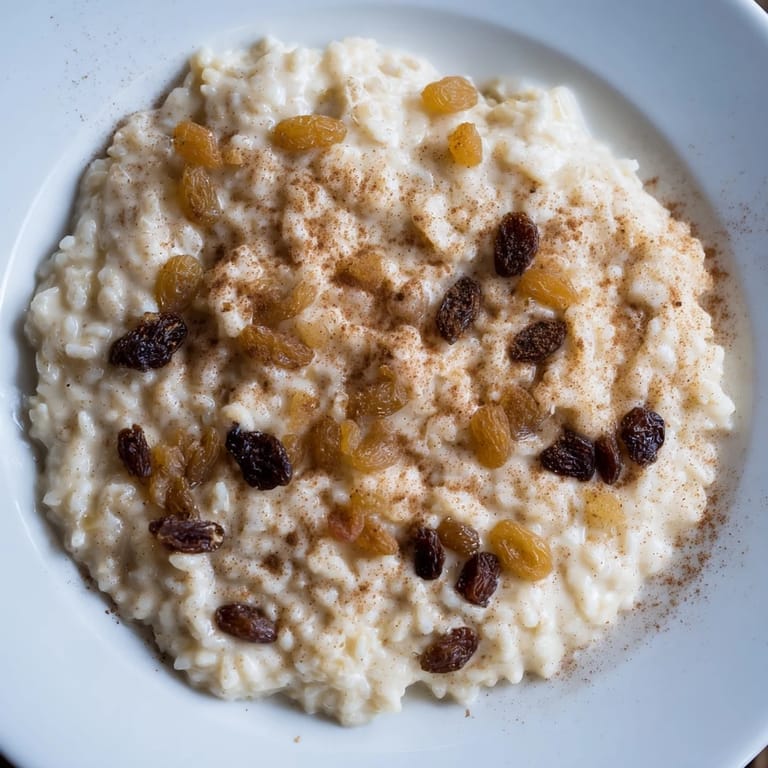
 There's a particular peace that comes from making something that doesn't demand your constant attention, and rice pudding taught me that some of the best dishes are the ones you prepare and then trust to the oven. The reward is a dessert that tastes like it took hours of devoted work when really you spent ten minutes at the stove and another hour letting heat do the thinking for you.
Flavor Variations Worth Exploring
Once you've made the base recipe once or twice, it becomes a canvas. I've swapped in coconut milk for half the regular milk and suddenly the pudding tasted like a tropical dream; I've used golden raisins instead of regular ones for a lighter sweetness; I've even stirred in dried cranberries for a subtle tartness that cut through the richness beautifully. The beauty is that the technique remains exactly the same—only the extras change.
Serving Suggestions and Pairings
Warm rice pudding needs nothing beyond a whisper of nutmeg, but if you want to dress it up, a dollop of barely sweetened whipped cream transforms it into something almost elegant. Stewed fruit—apple, pear, or even stone fruit—sits beautifully alongside, adding texture and a gentle tartness. For a grown-up twist, a drizzle of honey or a small glass of dessert wine on the side feels unexpectedly sophisticated.
Storage and Make-Ahead Wisdom
This pudding improves over a day or two, the flavors settling and deepening as it sits in the refrigerator. It keeps beautifully for up to four days covered, and honestly, leftovers eaten straight from the fridge are just as wonderful as the warm version. You can make it fully the day before a dinner party and simply reheat it gently in a low oven or, if you prefer, serve it chilled.
- To reheat, place the pudding in an oven-safe dish, cover loosely with foil, and warm at 150°C (300°F) for 10-15 minutes, or until heated through.
- Freeze for up to three months in a tightly covered container, though the texture becomes slightly less silky after thawing.
- If the pudding seems too thick after refrigeration, stir in a splash of milk to loosen it before serving.
 Save Pin
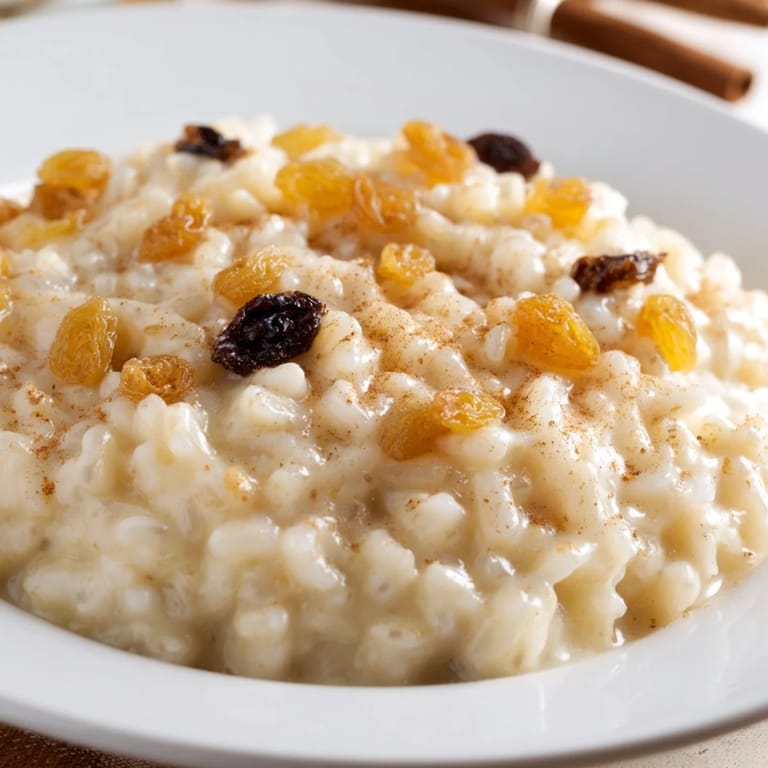
 Rice pudding reminds me that sometimes the most memorable foods are the quiet ones, the dishes that comfort without demanding attention or complicated techniques. If you make this even once, I suspect you'll find yourself returning to it.
Recipe FAQs
- → What type of rice is best for this dish?
Short-grain rice is preferred due to its higher starch content, which helps achieve the creamy, tender texture.
- → Can I substitute milk for a dairy-free option?
Yes, coconut milk can replace half or all of the milk to add richness while keeping a similar texture.
- → How do I ensure the rice cooks evenly?
Rinse the rice thoroughly and stir gently midway through baking to promote even cooking and prevent sticking.
- → What is the purpose of adding raisins?
Raisins add natural sweetness and a chewy contrast that complements the creamy rice base.
- → Can this dish be served cold?
Yes, it can be enjoyed warm or chilled, depending on personal preference.
- → How to enhance the flavor without extra sugar?
Adding spices like cinnamon, vanilla, and a touch of nutmeg can enrich flavor without additional sweetness.