 Save Pin
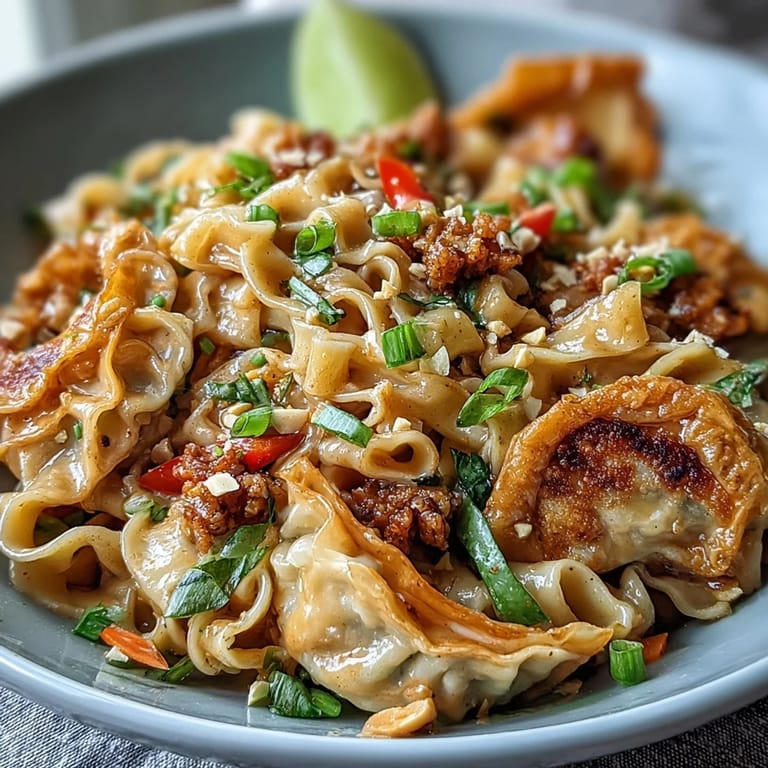
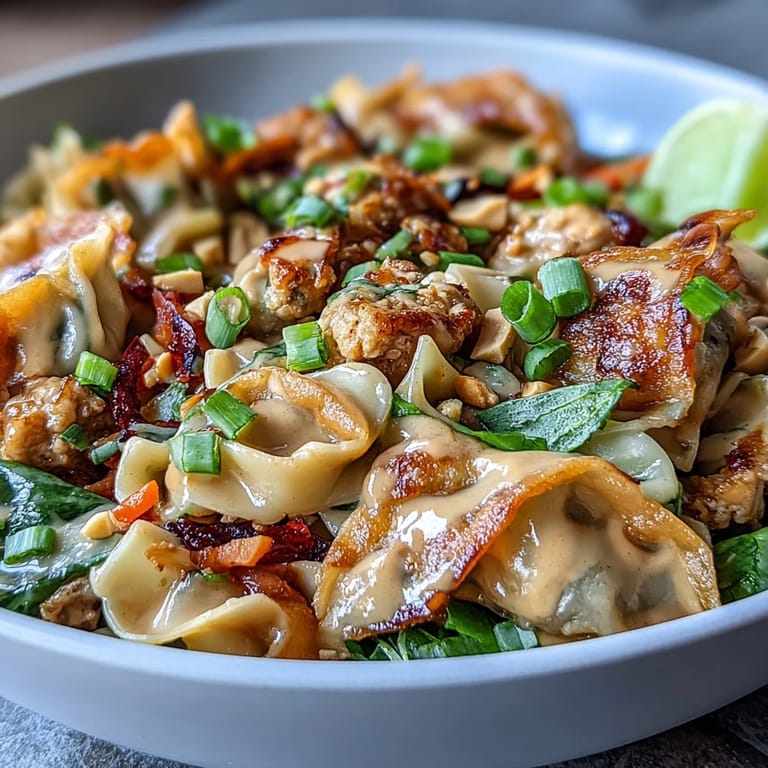
 There's something magical about the moment when a noodle bowl comes together—when creamy sauce coats tender strands and everything glistens under kitchen light. I discovered this particular version while experimenting one weeknight, trying to recreate the depth of a restaurant dish but with ingredients I actually had on hand. The trick that changed everything was that potsticker technique, pressing the noodles into the pan to catch crispy edges that make you want to scrape the bottom of the bowl. Ground chicken keeps things simple and honest, while the peanut sauce does the real talking.
I made this for my sister on a rainy Thursday when she texted asking what I was cooking and suddenly she was in my kitchen, perched on a stool with a glass of wine. We stood there talking while the noodles crisped up, and she kept stealing bites of the raw vegetables straight from the cutting board like we were teenagers again. That bowl somehow tasted better than usual—maybe because someone else was enjoying it, or maybe because the kitchen felt less like a chore and more like a conversation.
Ingredients
- Ground chicken (1 lb): The quiet backbone here—use it straight from the package or brown it gently so it stays tender and absorbs the sauce rather than turning into dry little pebbles.
- Wide rice noodles or lo mein (8 oz): These have just enough body to stand up to the sauce and crisp beautifully on the edges; thinner noodles get too soft when pressed.
- Red bell pepper, carrots, snap peas: Pick vegetables that hold their color and slight crunch; they're not just filling, they're the brightness that cuts through all that creamy richness.
- Creamy peanut butter (1/3 cup): The real star—make sure it's quality stuff you'd actually eat by the spoon, not something that tastes like cardboard.
- Soy sauce (3 tbsp): This provides the salt and depth that makes people ask what you put in the sauce; use tamari if you're steering clear of gluten.
- Rice vinegar, honey, sesame oil: These three work as a triangle—vinegar keeps things bright, honey rounds out the sharp edges, sesame oil adds that toasty background note you can't quite name.
- Sriracha or chili garlic sauce (1 tbsp): Heat is personal; start here and taste as you go, knowing you can always add more but you can't take it back.
- Water (1/2 cup plus more): This is your flexibility—every peanut butter is slightly different, so you'll adjust until the sauce coats the noodles like silk.
- Roasted peanuts, fresh cilantro, lime wedges: These aren't afterthoughts; they're the final note that makes the bowl feel intentional and complete.
Tired of Takeout? 🥡
Get 10 meals you can make faster than delivery arrives. Seriously.
One email. No spam. Unsubscribe anytime.
Instructions
- Make the sauce first:
- Whisk peanut butter, soy sauce, rice vinegar, honey, sesame oil, sriracha, and water together until completely smooth—no lumps hiding in there. Taste it now, and don't hesitate to adjust; if it tastes too thick, thin it with a little water, and if it's too sharp, add a touch more honey to round it out.
- Get the noodles cooking:
- Bring a big pot of salted water to a rolling boil and cook your noodles exactly to package instructions, stopping them at al dente—that moment before they go soft. Drain them, toss with just a brush of oil so they don't clump together, and set them aside on a plate.
- Brown the chicken gently:
- Heat your pan over medium-high heat and let the oil shimmer before adding the chicken. Break it into small pieces with a wooden spoon as it cooks, and don't rush it—you want it golden and cooked through without any pink inside, which takes about five to six minutes.
- Get the vegetables tender:
- In the same pan (no need to wash it, all that flavor is stuck there), toss in your bell pepper, carrots, snap peas, and half the green onions. Keep them moving with a spatula or tongs for two to three minutes so they soften just slightly but still have enough snap to feel fresh.
- Create the crispy noodle edges:
- Pour your drained noodles into the pan and spread them into an even layer, pressing down gently with your spatula. Leave them alone for two to three minutes—this is where the magic happens, where the bottom of the noodles makes contact with the hot pan and develops those crispy, caramelized edges that remind you of potstickers.
- Bring it all together:
- Return the cooked chicken to the pan, pour in all your peanut sauce, and toss everything together until every strand of noodle is coated and heated through. If it seems too thick, splash in a little water until it flows like silk around the noodles.
- Serve with intention:
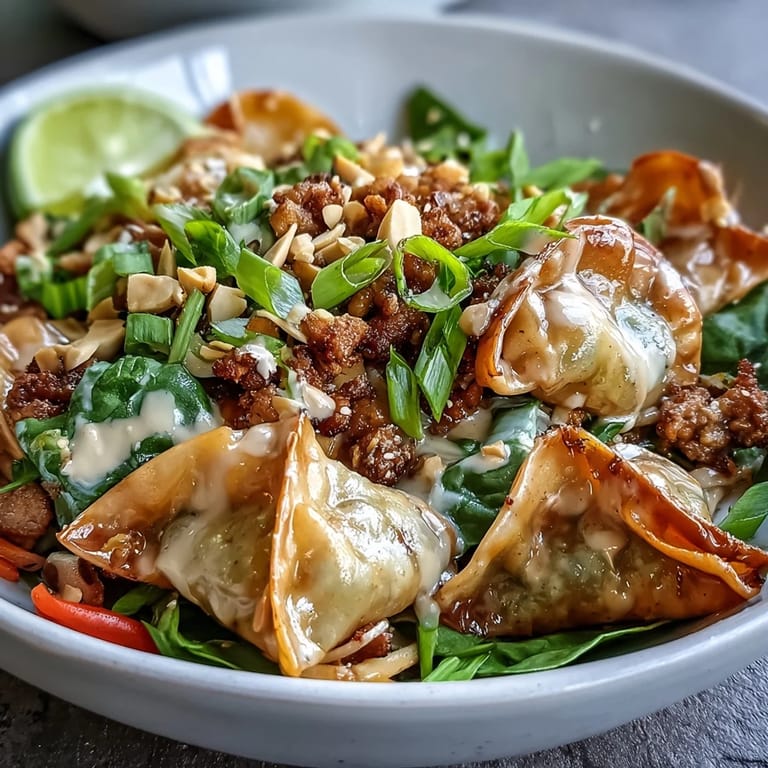
- Divide the noodles among four bowls, then scatter roasted peanuts, remaining green onions, and fresh cilantro over each one. Nestle a lime wedge beside each bowl and let people squeeze it over their own noodles—they'll appreciate that small choice.
 Save Pin
 I'll never forget the silence that fell over the table when everyone took that first bite—not an uncomfortable quiet, but the kind where people are too focused on what's in their bowl to talk. The way the crispy noodle edges crackled under the fork, the way the peanut sauce somehow tasted both comforting and exciting at the same time, even the small ritual of squeezing lime over everything made it feel like more than just dinner.
Making It Your Own
This recipe is flexible enough to bend to what you have in your kitchen and what you're craving. If ground chicken isn't calling to you, crumbled tofu or a plant-based ground keeps all the texture and picks up the sauce beautifully, or you could even use shrimp if you want something lighter. Add shredded cabbage or bean sprouts for extra crunch, swap in whatever vegetables are looking fresh at the market, or push the sriracha higher if you like heat that lingers on your lips.
The Potsticker Technique Explained
This method is borrowed from potsticker dumplings, where the magic lives in the contrast between tender and crispy. When you press the noodles into the hot pan without stirring, the bottom layer makes direct contact with the heat and begins to caramelize and crisp, creating little pockets of texture that completely change the eating experience. It only takes a few minutes, but it's the difference between a good noodle bowl and one people actually remember and ask you to make again.
Pairing and Serving Thoughts
This bowl doesn't demand much company, but if you're thinking about a drink, a crisp white wine like Riesling or a light pilsner beer handles the heat and richness without competing with the flavors. Serve everything family-style with the garnishes in small bowls so people can add as much or as little cilantro and peanuts as they want, making each bowl feel a little more like their own. The whole meal takes forty minutes from start to finish, which means you can actually enjoy it instead of spending your evening in a cloud of steam.
- Make the sauce while the water comes to a boil so you're not waiting around with nothing to do.
- If you're cooking for someone with a peanut allergy, try tahini or sunflower seed butter as a one-to-one swap.
- Leftovers keep well in the fridge for two or three days, though the crispy noodle edges soften up, so consider reheating the components separately and reassembling if you want to recapture that texture.
 Save Pin
 There's real satisfaction in building a bowl like this, watching all the separate elements come together into something that tastes like you spent hours in the kitchen when really you didn't. Make it once, and it becomes the thing you reach for when you want something that feels special but doesn't require special effort.
Recipe FAQs
- → What makes these noodle bowls unique?
The potsticker technique creates crispy, golden edges on the noodles while keeping them tender inside, adding satisfying texture contrast to every bowl.
- → Can I make this dish vegetarian?
Yes, substitute ground chicken with firm tofu crumbles or plant-based ground meat alternative for equally delicious results.
- → How spicy is the peanut sauce?
The sauce has mild to medium heat from sriracha. Adjust spice level by adding more or less chili garlic sauce according to your preference.
- → What noodles work best for crispy edges?
Wide rice noodles or lo mein noodles hold up well during the crisping process. Avoid thin rice vermicelli as they may become too delicate.
- → Can I prepare the peanut sauce ahead?
Absolutely. The sauce can be made up to 5 days in advance and stored refrigerated. Thin with warm water before serving if it thickens.
- → What vegetables can I add?
Shredded cabbage, bean sprouts, baby corn, or bok choy make excellent additions. Use whatever crisp vegetables you enjoy.