 Save Pin
 There's something about a bowl of chili that stops time, you know? My neighbor knocked on my door one October evening asking if I had any comfort food to share, and without thinking twice, I started browning ground beef while the kitchen filled with the smell of cumin and smoked paprika. That night taught me that chili isn't just about feeding people—it's about creating a moment where everyone can customize their bowl exactly how they want it. Now whenever I make it, I think about that conversation over steaming bowls and how a simple meal can turn into something people actually remember.
I'll never forget making this for a work potluck when someone mentioned they were vegetarian and I almost panicked—turns out I had enough beans and peppers already in the pot that I could just skip the beef for half of it. That's when I realized this recipe is actually built for flexibility, and that flexibility is what makes it so reliably good for whoever shows up to your table.
Ingredients
- Olive oil: Use a quality one you actually enjoy the taste of, since it forms the flavor foundation for everything that follows.
- Onion and garlic: These are your aromatics—don't rush this step, give them time to soften and become sweet.
- Red and green bell peppers: They add body and a subtle sweetness that balances the spices beautifully.
- Ground beef, turkey, or plant-based alternative: Whatever protein you choose, break it into small pieces as it browns so it distributes evenly throughout.
- Tomato paste: This concentrated ingredient does serious flavor work in just one tablespoon—don't skip it or substitute tomato sauce.
- Diced tomatoes: Canned is perfectly fine and honestly more consistent than fresh.
- Kidney beans and black beans: Drain and rinse them to remove excess sodium and reduce the likelihood of a gassy situation later.
- Corn kernels: Fresh, frozen, or canned all work equally well; frozen ones are actually my go-to because they're picked at peak ripeness.
- Chili powder, cumin, smoked paprika, oregano: These spices are where the chili gets its personality—adjust them based on what you have and what heat level you're comfortable with.
- Beef or vegetable broth: This is your liquid base, and it matters more than you'd think for the final consistency.
Tired of Takeout? 🥡
Get 10 meals you can make faster than delivery arrives. Seriously.
One email. No spam. Unsubscribe anytime.
Instructions
- Build your flavor base with heat:
- Warm the olive oil in your pot over medium heat, then add the diced onion and give it a few minutes to become translucent and soft. You'll notice the kitchen starting to smell savory and inviting—that's your signal things are going right.
- Layer in the aromatics and vegetables:
- Stir in the garlic and bell peppers, letting them cook for a few more minutes until they soften slightly and release their flavors into the oil. This gradual building is what gives chili its depth rather than just tasting like a can of beans.
- Brown the protein evenly:
- Add your ground beef and break it into small pieces as it cooks, using the back of your spoon to separate it thoroughly. Once it loses all its pink color and browns slightly, you're ready to move forward.
- Deepen the flavor with paste:
- Stir in the tomato paste and let it cook for about a minute, which helps it blend into the oil and deepen rather than staying separate. This one-minute pause makes a noticeable difference in the final taste.
- Add everything and simmer:
- Pour in the diced tomatoes, both types of beans, corn, and all your spices, then add the broth and stir everything together until well combined. Bring it to a simmer, reduce the heat to low, cover loosely, and let it bubble gently for 25-30 minutes, stirring occasionally so nothing sticks to the bottom.
- Prepare your base grain while chili rests:
- Use whatever time the chili is simmering to cook your rice, quinoa, farro, or other grain according to package directions so everything finishes at the same time.
- Assemble and serve:
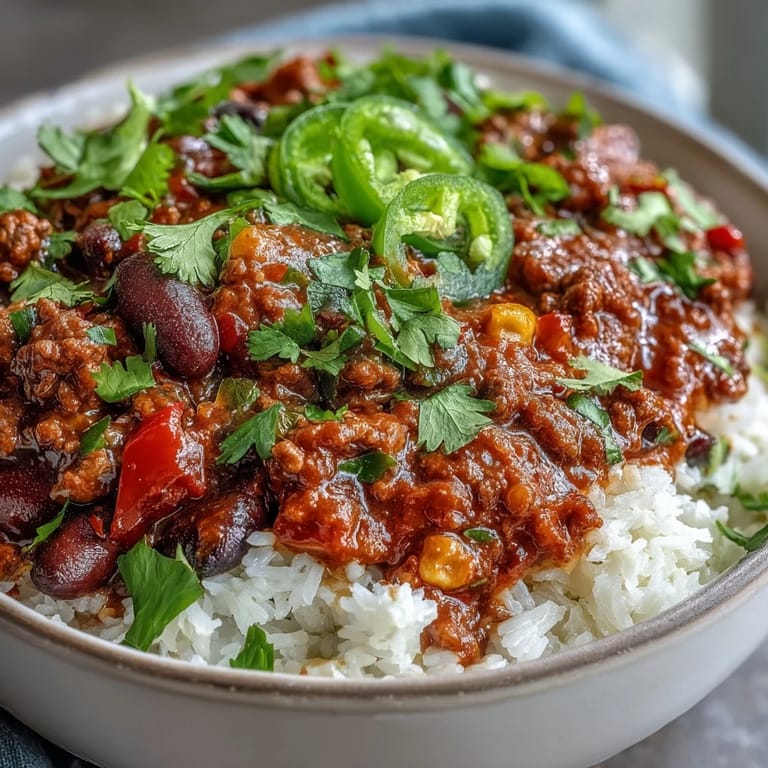
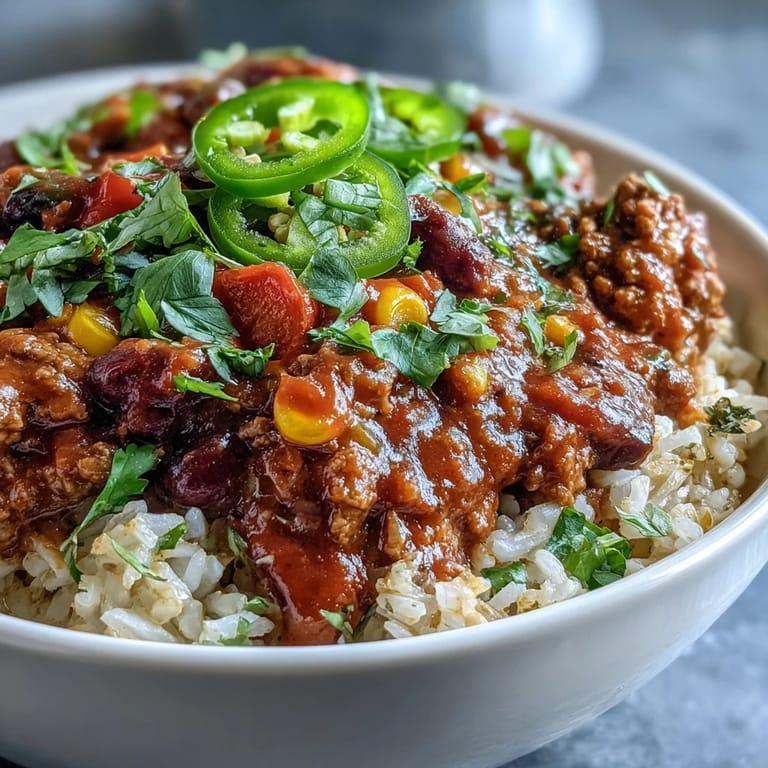
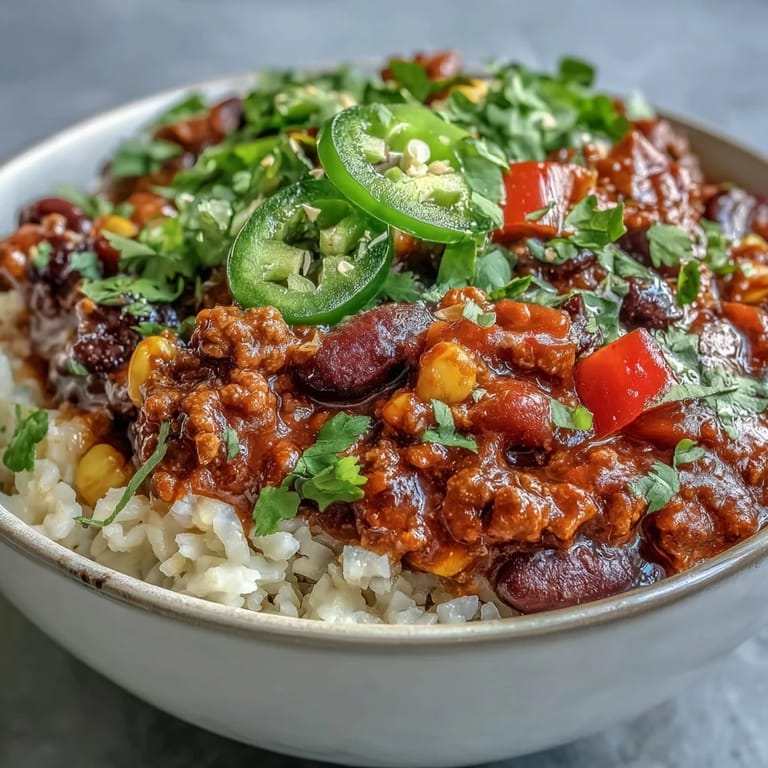
- Scoop your cooked grain into bowls and ladle the hot chili over the top, then let everyone add their own toppings in whatever combination speaks to them.
 Save Pin
 My favorite moment with this recipe happened on a random Wednesday when my teenager came home from school, smelled the chili, and just sat in the kitchen doing homework while it simmered, occasionally asking if it was ready yet. Food that makes people want to hang around the kitchen is food worth making again and again.
Customizing Your Bowl
The real magic happens after the chili hits the bowl, because every person gets to build their own version. Some people love the cooling contrast of sour cream with the heat, others go all-in on fresh cilantro and lime juice for brightness, and some folks just want cheese and nothing else. I've learned that the best part of making chili isn't controlling the outcome—it's giving people the tools to make it their own.
Stretching It for Leftovers
This recipe naturally makes about four good servings, but chili is one of those dishes that actually improves when you refrigerate it overnight and reheat it the next day. The flavors meld and deepen, and you'll find yourself spooning it over different grains, into quesadillas, or even adding it to nachos without it feeling like leftover food. I've accidentally created entirely new meals from day-old chili, and honestly, those improvised versions sometimes taste better than the original.
Switching Up Proteins and Grains
Ground turkey makes a lighter version that doesn't feel less hearty, and plant-based ground meat has gotten genuinely good if you're going vegetarian or just want to try something different. As for grains, I've served this over white rice, brown rice, quinoa, farro, and even cornbread crumbles—each one brings its own texture and subtle flavor shift. The formula stays the same, but the experience changes just enough to keep things interesting without any extra effort.
- Use whatever grain you have on hand or that fits your dietary preferences.
- If you want extra protein, add a beaten egg to the grain right before serving and stir it in while hot.
- Leftover chili freezes beautifully for up to three months, so double the recipe guilt-free.
 Save Pin
 This chili is honestly just a framework for whatever you're craving on any given day, and that's what keeps me making it. Whether you're cooking for one or feeding a crowd, it somehow always delivers.
Recipe FAQs
- → Can I make this chili vegetarian?
Yes, simply substitute plant-based ground meat or add an extra can of beans. The flavors work beautifully with either option.
- → How spicy is this chili bowl?
The spice level is mild to medium. You can easily adjust the heat by adding more or less cayenne pepper and chili powder to suit your taste.
- → What grains work best as a base?
Rice and brown rice are classic choices, but quinoa, farro, bulgur, and barley all make excellent bases for soaking up the flavorful chili.
- → How long does this keep in the refrigerator?
Stored in an airtight container, the chili will keep for up to 4 days. The flavors actually deepen and improve after a day or two.
- → Can I freeze this chili?
Absolutely. Let the chili cool completely before freezing in portions for up to 3 months. Thaw overnight in the refrigerator and reheat gently on the stove.
- → What are the best toppings?
Shredded cheddar, sour cream, sliced green onions, fresh cilantro, diced avocado, jalapeño slices, and lime wedges all add wonderful flavor and texture contrast.