 Save Pin
 My kitchen smelled like toasted sesame oil and ginger the afternoon my neighbor stopped by, drawn in by the aroma drifting through our shared wall. She watched me assemble these bowls with quiet curiosity, then asked if she could take one home. The next week, she showed up with her own version, tweaked with extra gochujang and a fried egg on top. That's when I knew this recipe had become something we both needed in our rotation.
I made this for my sister during her first week back from traveling, when she was tired and honestly craving something that felt both comforting and alive. Watching her face light up as she mixed the components together reminded me that food isn't just about hunger. It's about showing up for people when they need a small moment of joy on their plate.
Ingredients
- Lean ground beef (500 g): Choose meat with minimal marbling to avoid excess grease pooling at the bottom of your bowl, though a bit of fat keeps it tender and flavorful.
- Soy sauce (2 tablespoons): Use tamari if you're avoiding gluten, and don't skip the toasted sesame oil because it's the difference between good and unforgettable.
- Toasted sesame oil (1 tablespoon): This ingredient does heavy lifting in flavor, so a little goes a long way and your kitchen will smell incredible.
- Brown sugar (1 tablespoon): It balances the salt and umami, rounding out the savory notes with subtle sweetness.
- Freshly grated ginger (2 teaspoons): Fresh is essential here because ground ginger tastes tired in comparison and you deserve better.
- Garlic cloves (3, minced): Three feels right for this quantity, enough to make a statement without drowning everything else out.
- Gochujang or sriracha (1 teaspoon, optional): Add this if you want heat that whispers rather than shouts, building warmth as you eat.
- Green onions (2, thinly sliced): Reserve some for garnish because they add freshness at the end that ties the whole bowl together.
- Sesame seeds (1 tablespoon): Toast them lightly in a dry pan first if you have time, and you'll notice how much more they contribute to the experience.
- Rice base (4 cups cooked): Jasmine rice is delicate and fragrant, but cauliflower rice works beautifully if you're keeping it lighter.
- Carrot, cucumber, radish (3 cups combined, prepared): These vegetables should be cut thin so they pickle quickly and stay crisp rather than turning soft.
- Rice vinegar (1/2 cup): This mild acid is gentle on your palate and brightens everything without asserting itself aggressively.
Tired of Takeout? 🥡
Get 10 meals you can make faster than delivery arrives. Seriously.
One email. No spam. Unsubscribe anytime.
Instructions
- Make your pickled vegetables first:
- Whisk rice vinegar, sugar, and salt in a bowl until the sugar dissolves completely, then toss in your julienned carrots, sliced cucumber, and radish. Let them sit for at least fifteen minutes, stirring once or twice so the vegetables soften slightly and the flavors meld.
- Get your rice ready:
- Follow package directions for your rice choice, whether that's jasmine or cauliflower, and keep it warm because a lukewarm base isn't what you're after.
- Brown the ground beef:
- Heat a large skillet over medium-high heat and add your beef, breaking it apart with a spoon as it cooks until no pink remains and it smells deeply savory, about five to seven minutes. If liquid pools at the bottom, tilt the pan and spoon some away because you want the meat to have texture, not swim.
- Build the sauce:
- Pour in your soy sauce, toasted sesame oil, brown sugar, fresh ginger, minced garlic, and gochujang if you're using it, stirring constantly so everything coats the beef evenly. Cook for two to three more minutes until the kitchen fills with that unmistakable Korean-inspired aroma and the sauce has reduced slightly.
- Finish with brightness:
- Remove from heat and fold in your sliced green onions and sesame seeds, stirring gently so they're distributed throughout rather than clumping in one corner.
- Assemble your bowls:
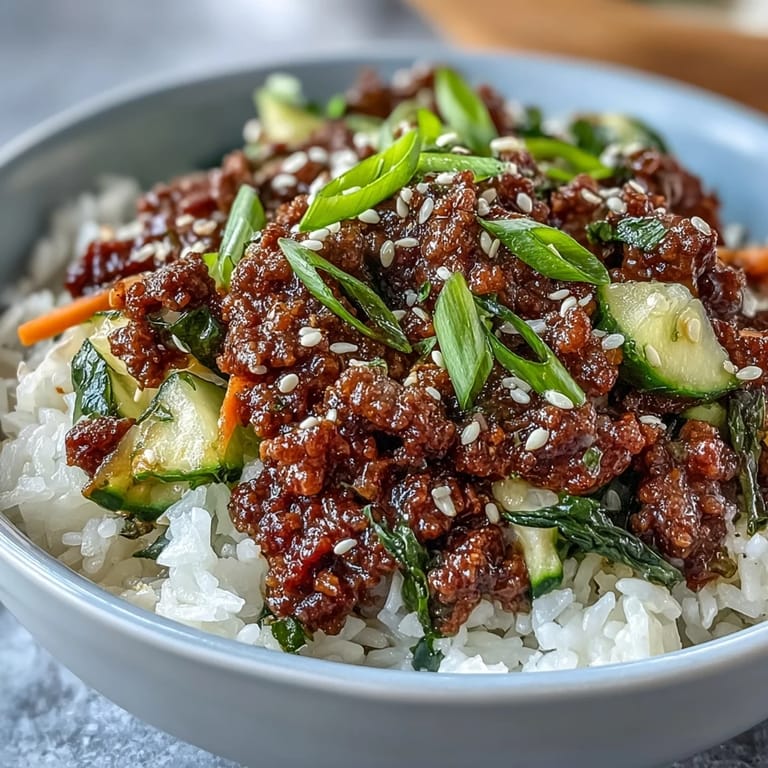
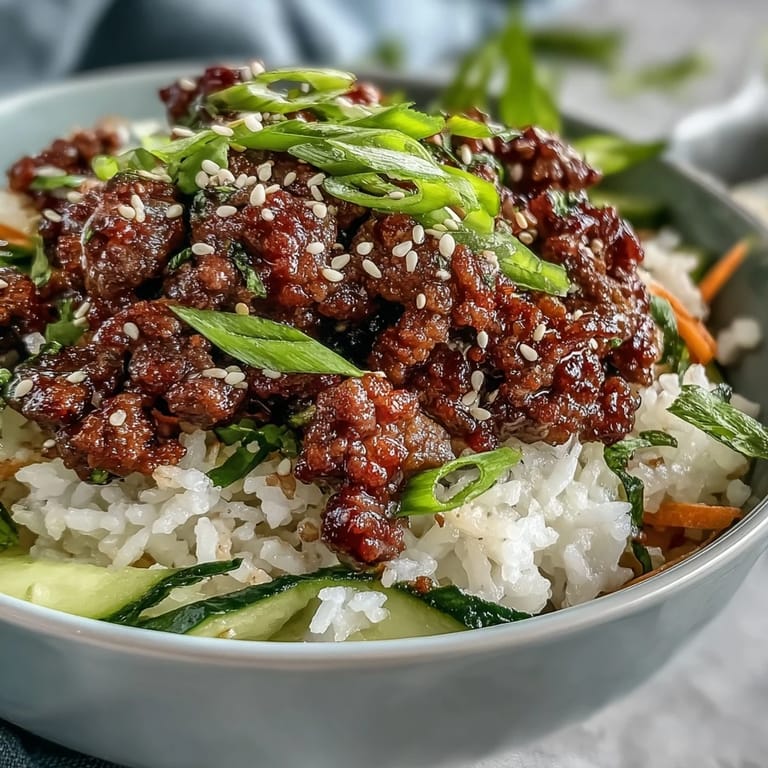
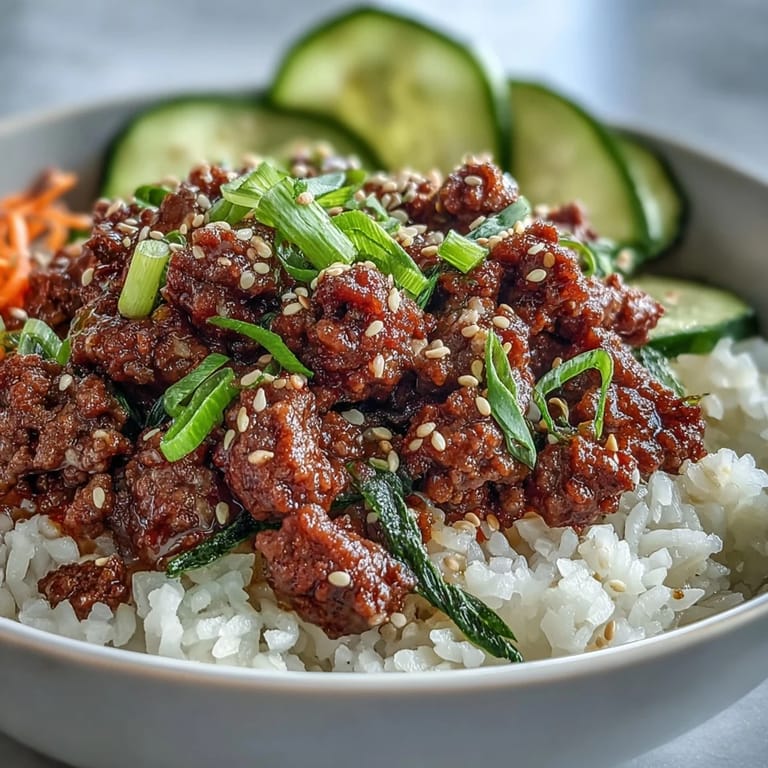
- Divide warm rice among four bowls, top each with a generous portion of seasoned beef, then add a handful of those crisp pickled vegetables that have been waiting patiently. Finish with a sprinkle of extra green onions and sesame seeds, then serve immediately while everything is still warm.
 Save Pin
 My partner had been stressed for weeks until the evening I set these bowls down in front of us. We sat in almost complete silence, just eating and breathing a little easier. Sometimes a meal is medicine, and this one happened to taste like forgiveness and care.
Why the Pickled Vegetables Matter
The pickles aren't just an afterthought or garnish pretending to do something. They're the counterbalance to the rich, umami-forward beef, cutting through the richness and waking up your taste buds with each bite. I learned this the hard way by skipping them once, thinking I'd save time, and ended up with a bowl that felt flat and one-dimensional. Now I understand that contrast is what makes this dish feel complete rather than just filling.
Choosing Your Base
Whether you choose jasmine rice or cauliflower rice depends on the mood you're in and what your body is asking for that day. Jasmine rice is traditional and feels indulgent, carrying the beef sauce like a proper foundation while still staying delicate enough to let other flavors shine. Cauliflower rice, on the other hand, brings a lightness that doesn't feel sacrificial at all because the beef and vegetables do enough heavy lifting that you don't miss the starch.
Make It Your Own
This recipe is flexible enough to become your personal signature without losing its soul. I've made it with ground turkey when beef felt too heavy, added a fried egg on top when I wanted more richness, and even crumbled tempeh for a friend who doesn't eat meat but didn't want to feel left out.
- A fried egg adds richness and visual appeal, with the runny yolk mixing into everything like a bonus sauce.
- Ground turkey or chicken works beautifully if you want something leaner without sacrificing the Korean-inspired flavor profile.
- Crumbled tofu or tempeh creates a satisfying vegetarian version that still feels hearty and intentional.
 Save Pin
 This bowl has quietly become the dish I make when I want to feel capable and nourished at the same time. It's fast enough for a Wednesday night and impressive enough for someone you're trying to show you care about.
Recipe FAQs
- → Can I make this bowl ahead of time?
Yes, prepare the seasoned beef and pickled vegetables up to 3 days in advance. Store separately in airtight containers in the refrigerator. Reheat the beef gently and assemble with fresh rice when ready to serve.
- → What can I substitute for gochujang?
Sriracha works well as a substitute, though it has a different flavor profile. You can also use red pepper flakes with a little miso paste, or simply omit it for a milder dish while still maintaining delicious flavor.
- → Is cauliflower rice as filling as regular rice?
Cauliflower rice provides a lighter, lower-carb alternative. While less filling than jasmine rice due to fewer calories and carbohydrates, the protein from the ground beef helps create a satisfying meal. You can also increase the beef portion for more substance.
- → How long do the pickled vegetables last?
The quick-pickled vegetables stay fresh in the refrigerator for up to one week when stored in a sealed jar or container. They actually develop more flavor as they marinate, making them great for meal prep.
- → Can I use different proteins?
Absolutely. Ground turkey, chicken, or crumbled tofu work beautifully with the same seasoning blend. Adjust cooking time slightly for poultry, ensuring it reaches 165°F internally. Vegetarian versions with tempeh are equally delicious.