 Save Pin
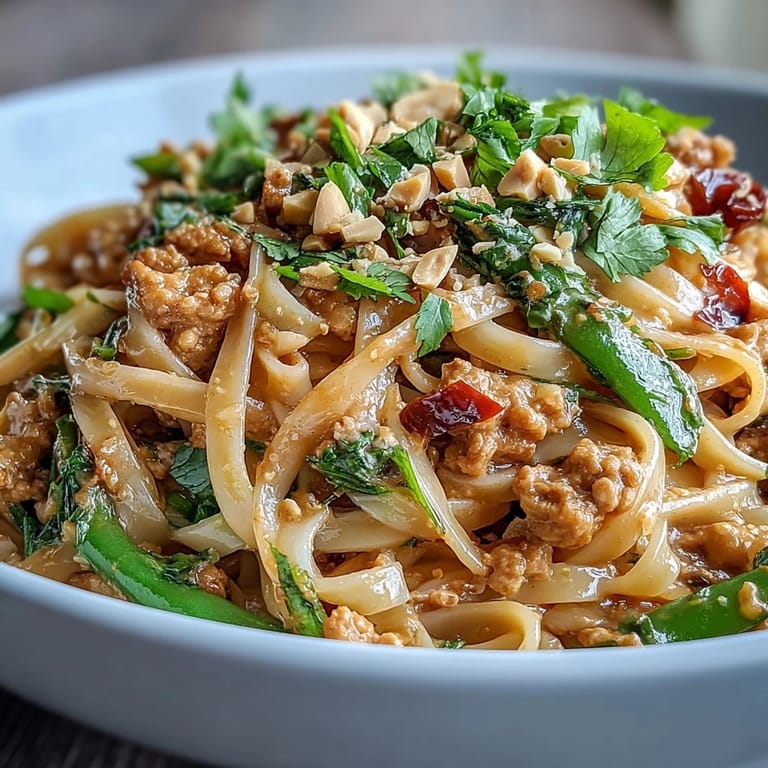
 One weeknight, I was standing in front of my pantry wondering how to rescue dinner when my eyes landed on a jar of peanut butter and a box of rice noodles. What followed was a happy accident—throwing everything into one pan and letting it all cook together, transforming into something that tasted like a Thai restaurant had invaded my kitchen. That moment taught me that the best meals often happen when you stop overthinking and just trust your instincts. Now this creamy peanut noodle bowl is my go-to when I want something impressive but don't have the energy for complicated cooking.
I made this for my sister last month when she was going through a rough patch, and I watched her face change the moment she tasted it. She kept asking for the recipe, then admitted it was the first meal in weeks that made her feel like someone actually cared. That's when I realized this dish isn't just about noodles and sauce—it's about feeding people something warm that says I'm thinking of you.
Ingredients
- Ground chicken: Use 80/20 lean-to-fat ratio so it browns beautifully without becoming dry, and you get those crispy edges that add texture to the final dish.
- Dried wide rice noodles: These are crucial because they absorb the sauce while cooking right in the pan, creating that creamy, cohesive texture rather than sitting separate and sad.
- Red bell pepper: Its natural sweetness balances the savory peanut sauce, and thinly slicing it ensures it softens perfectly in the short cooking time.
- Shredded carrots: They add sweetness and a subtle crunch that keeps each bite interesting, even as the rest of the dish becomes wonderfully soft.
- Snap peas: These keep their snap if you don't overcook them, which is why the timing matters—you want them just tender enough to burst when you bite down.
- Green onions: Split the white and green parts; the whites cook down and infuse the sauce, while the green tops stay fresh and sharp on top as a garnish.
- Garlic and ginger: These two create the flavor foundation, releasing their oils into the hot pan to perfume everything that follows.
- Creamy peanut butter: Go for the kind without added sugar if possible, because you're already getting sweetness from the honey and hoisin sauce.
- Low-sodium soy sauce: This prevents the dish from becoming oversalted, which is easy to do when you're layering multiple savory components.
- Hoisin sauce: It's the secret ingredient that adds depth and a subtle fermented complexity that makes people wonder what your secret is.
- Rice vinegar: The acidity cuts through the richness of the peanut butter and prevents the dish from feeling heavy on your stomach.
- Honey or maple syrup: Either works, though I prefer honey for its floral quality that rounds out the sharp edges of the vinegar.
- Toasted sesame oil: This is non-negotiable—regular sesame oil doesn't have the same nutty depth, and it makes all the difference in the final flavor profile.
- Sriracha or chili garlic sauce: Start with one teaspoon and taste before adding more, because heat preferences vary wildly from person to person.
- Chicken or vegetable broth: Low-sodium is key here so you can control the saltiness of the finished dish without guessing.
- Fresh lime juice: Always use fresh lime, never the bottled stuff—it brightens everything at the last second and makes the dish sing.
Tired of Takeout? 🥡
Get 10 meals you can make faster than delivery arrives. Seriously.
One email. No spam. Unsubscribe anytime.
Instructions
- Brown the chicken until golden:
- Heat your skillet over medium-high heat and add a light drizzle of oil—just enough to coat the bottom. Add the ground chicken and let it sit for a moment before breaking it up with a spoon or wooden spatula; this creates those delicious browned edges that add texture. Cook until no pink remains and you see golden-brown bits, about 5 minutes.
- Bloom the aromatics:
- Push the chicken to the side and add your minced garlic, grated ginger, and the white parts of the green onions directly to the hot pan. You'll smell it immediately—that's the signal that their flavors are releasing into the oil and ready to infuse everything else.
- Introduce the vegetables:
- Toss in your sliced bell pepper, shredded carrots, and halved snap peas, stirring everything together so it's coated in that ginger-garlic-flavored oil. Give them 2 to 3 minutes to start softening; they shouldn't be completely tender yet because they'll continue cooking when the noodles go in.
- Spread the noodles evenly:
- Break up your dried rice noodles slightly and scatter them across the pan in an even layer over all the vegetables. Don't stir them yet—let them sit for just a moment so they start making contact with the hot surface.
- Mix the sauce until silky:
- In a separate bowl, whisk together your peanut butter, soy sauce, hoisin, rice vinegar, honey, sesame oil, and sriracha, then slowly add the broth while whisking so everything blends smoothly without lumps. This takes about a minute of elbow grease, but it's worth it because a lumpy sauce is just sad.
- Pour and simmer:
- Pour that beautiful sauce over the noodles and vegetables, stirring gently so everything gets coated. Cover with a lid and let it simmer for 4 to 6 minutes, lifting the lid occasionally to stir and check that the noodles are absorbing the sauce evenly.
- Return the chicken and marry the flavors:
- Add your cooked chicken back into the pan and toss everything together over low heat for another 2 to 3 minutes, which allows all the components to get to know each other and meld into one harmonious dish. Finish with a squeeze of fresh lime juice, which brightens everything and adds a little sparkle.
- Plate and garnish generously:
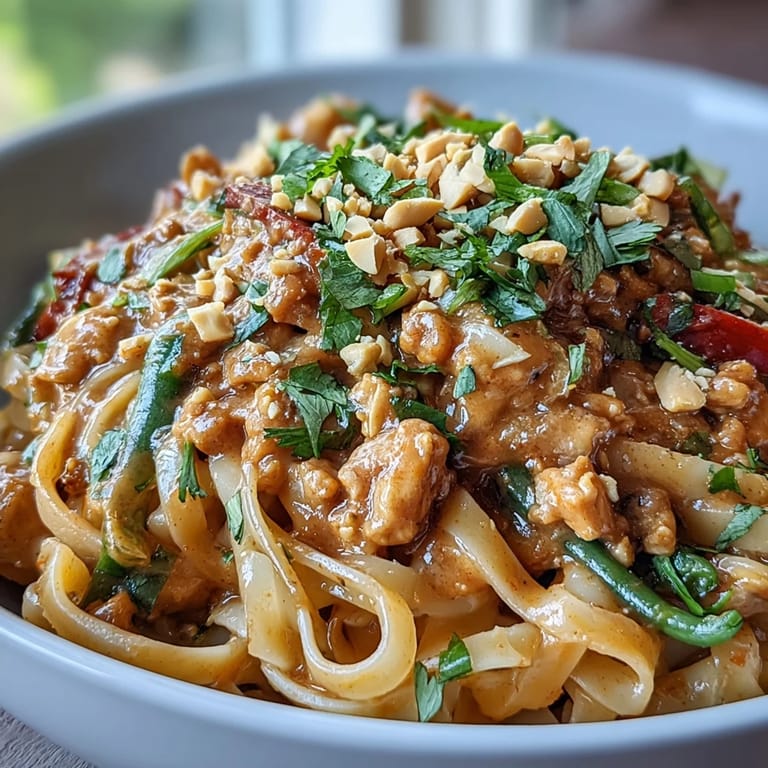
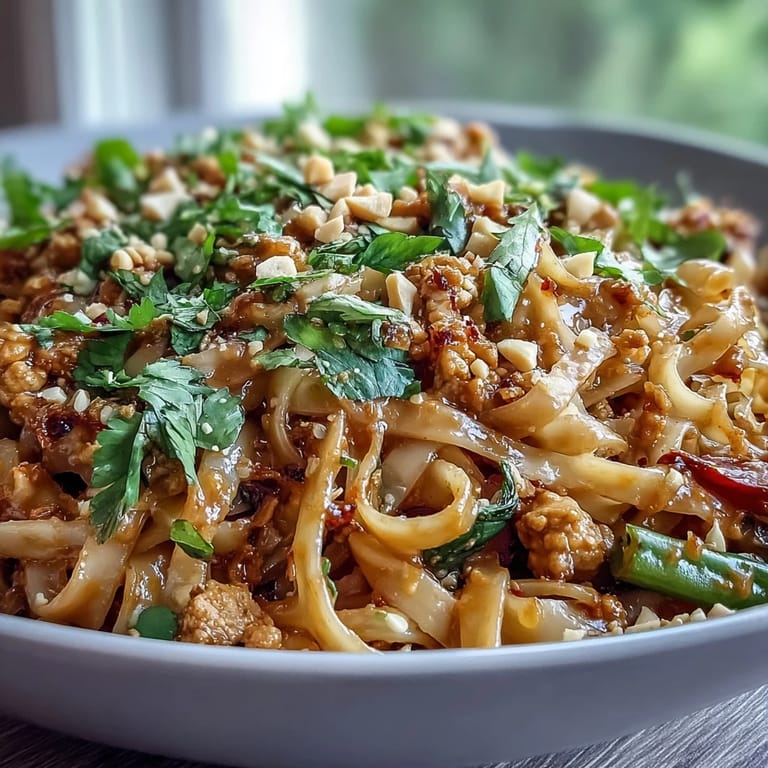
- Divide the creamy noodle mixture among four bowls and top each one with chopped roasted peanuts, fresh cilantro, the reserved green parts of the green onions, and a lime wedge for squeezing. The garnishes aren't just pretty—they add freshness and crunch that contrast with the soft, creamy noodles.
 Save Pin
 Last winter, I made this for a potluck and watched it disappear before the main course was even finished—people were going back for seconds while everything else sat untouched. The best part was overhearing someone say it tasted like they were eating at their favorite Thai restaurant, except better because it was homemade.
The Secret to Creamy Sauce
The magic here isn't complicated—it's about the ratio of peanut butter to liquid and the order in which things happen. When you whisk the peanut butter with the broth before it hits the hot pan, you're preventing clumps and creating an emulsion that coats every noodle evenly instead of pooling at the bottom. I learned this after making the dish six different ways, and trust me, this way works.
Protein Swaps and Variations
Ground turkey is a natural swap if you want something slightly leaner, and the cooking time stays the same—just watch it because turkey can dry out faster than chicken if you're not paying attention. Crumbled tofu is my go-to when I'm cooking for my vegetarian friend, and I always press it first to remove excess moisture so it browns instead of steaming.
Timing and Temperature Tips
The entire dish relies on medium-high heat at the beginning and then a gentle simmer for the noodles; if your heat is too high when the noodles are cooking, they'll stick to the bottom and burn before they soften. I learned this the hard way when I got impatient waiting for dinner and ended up with a slightly charred bottom that honestly wasn't the worst thing, but it wasn't ideal either.
- Prep all your vegetables before you start cooking because once the pan is hot, everything moves quickly and you don't want to be frantically chopping carrots while the chicken is browning.
- Taste the sauce before adding the noodles so you can adjust the heat level and saltiness while you still have the chance to fix it easily.
- If your pan doesn't have a lid, a baking sheet or even a large plate works perfectly fine to trap the steam and cook those noodles through.
 Save Pin
 This dish has become my answer to almost every question about what to cook, because it delivers restaurant-quality flavor without any of the stress or pretension. Make it once, and you'll be making it again before the week is over.
Recipe FAQs
- → Can I use a different protein?
Yes, ground turkey works well as a lighter alternative. For a vegetarian version, crumbled firm tofu absorbs the peanut sauce beautifully and provides protein while maintaining the dish's creamy texture.
- → What type of noodles work best?
Wide rice noodles are traditional and soak up the sauce well. Flat rice noodles or pad thai-style noodles also work. Avoid thin rice vermicelli as they may become too soft during cooking.
- → How can I make this gluten-free?
Substitute tamari for soy sauce and use a gluten-free hoisin sauce. Rice noodles are naturally gluten-free, but always check labels on condiments to ensure they meet your dietary needs.
- → Can I adjust the spice level?
Absolutely. Start with 1 teaspoon of sriracha and add more gradually. For extra heat without altering the sauce consistency, sprinkle red pepper flakes or serve with additional chili sauce on the side.
- → How do I store and reheat leftovers?
Store in an airtight container in the refrigerator for up to 3 days. Reheat gently in the microwave or on the stovetop, adding a splash of water or broth to loosen the sauce as noodles tend to absorb more liquid when stored.
- → What vegetables can I substitute?
Shredded cabbage, bean sprouts, or julienned zucchini work beautifully. Bok choy adds nice crunch, while sliced mushrooms provide earthy flavor. Use whatever crisp vegetables you have on hand.