 Save Pin
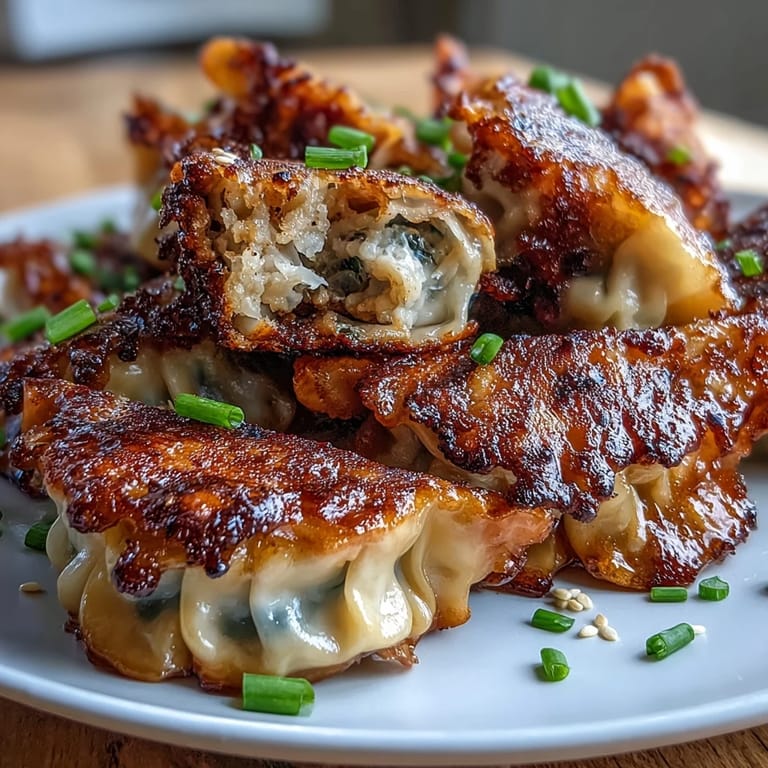
 I discovered the magic of smashed gyozas on a random Tuesday night when my friend texted that she was coming over with zero notice. The freezer had ground pork and I spotted a package of wonton wrappers hiding behind the ice cream, so I decided to improvise. What started as a desperate dinner solution became something I now make constantly because it hits that perfect balance between impressive and ridiculously easy. The crispy bottoms, the steamy tender edges, the savory filling bursting with ginger and garlic—it all comes together in about half an hour. Now I keep wonton wrappers stocked like they're essential supplies.
I'll never forget making these for my partner's colleagues who dropped by unexpectedly one evening. I was honestly nervous about serving homemade dumplings to people I barely knew, but watching everyone's faces light up after that first bite completely changed my confidence in the kitchen. Someone asked for the recipe, then someone else did, and suddenly I was writing it down on the back of a grocery receipt. That moment taught me that simple, well-executed food speaks louder than complicated techniques ever could.
Ingredients
- Ground pork: The fatty content keeps the filling incredibly juicy—use 200g for a filling that actually stays moist instead of turning crumbly and sad.
- Napa cabbage: This shreds beautifully fine and releases just enough moisture to flavor everything without making the filling soggy if you squeeze it gently first.
- Green onions: The bright, sharp bite here balances the richness of the pork and sesame oil perfectly.
- Garlic and ginger: Mince these really small so they distribute evenly throughout each dumpling instead of showing up as surprise chunks.
- Soy sauce and sesame oil: These two are non-negotiable flavor anchors—don't skip or skimp on the sesame oil because it's what makes these taste authentically delicious.
- Store-bought wonton wrappers: The time saver that actually tastes fantastic; check the refrigerated section rather than frozen for better texture.
- Neutral oil: Canola or sunflower works best here because it won't burn during the medium-high heat cooking.
Tired of Takeout? 🥡
Get 10 meals you can make faster than delivery arrives. Seriously.
One email. No spam. Unsubscribe anytime.
Instructions
- Mix your filling together:
- Combine the pork, cabbage, green onions, garlic, soy sauce, sesame oil, ginger, sugar, and pepper in a bowl and mix until everything is evenly distributed and the filling smells incredibly aromatic. Don't overmix or the pork will get tough; just stir until you see no white streaks of unmixed meat.
- Fill and seal your dumplings:
- Lay out the wonton wrappers and place about a heaping teaspoon of filling in the center of each one—if you overstuff them, they'll burst while cooking. Wet your finger and run it along the edges, then fold each wrapper in half to create a half-moon shape and press gently to seal, then use your palm to flatten it slightly so it looks intentionally smashed.
- Pan-fry the first side:
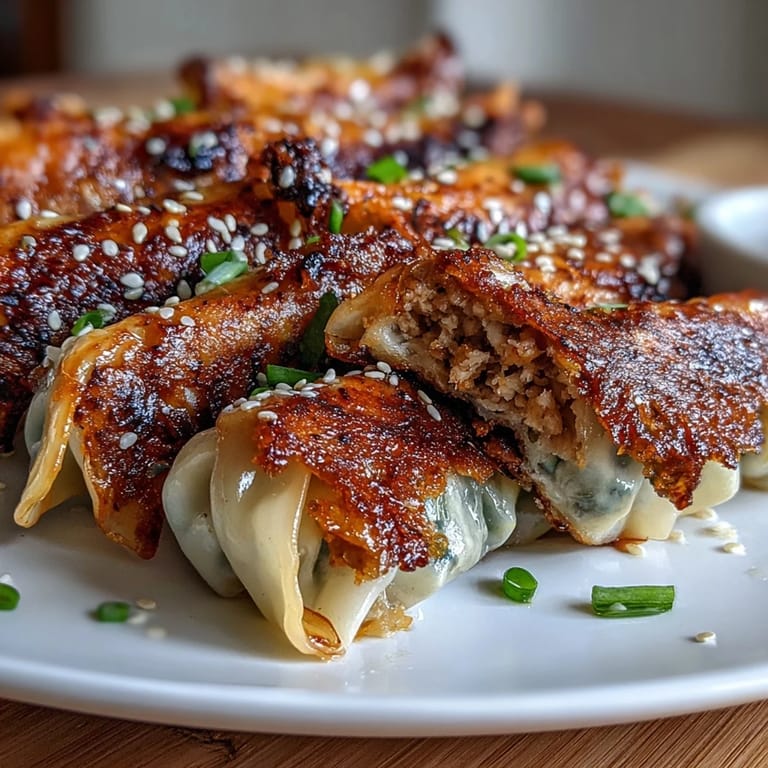
- Heat 1 tablespoon of oil in your skillet over medium-high heat until it shimmers, then place half the dumplings flat side down and let them cook undisturbed for 2-3 minutes until the bottoms turn golden brown and crispy. Resist the urge to move them around; they need that contact time to develop that addictive crust.
- Steam until cooked through:
- Add 2 tablespoons of water to the pan and immediately cover it with a lid—the sudden steam will cook the filling through while keeping the wrappers tender. After 2-3 minutes, you'll notice the wrappers look slightly translucent and feel tender when you poke them, which means the filling is completely cooked.
- Re-crisp and finish:
- Remove the lid and cook for another minute so any remaining moisture evaporates and the bottoms get crispy again. Transfer to a plate and repeat with the remaining dumplings using the second tablespoon of oil.
- Make your dipping sauce:
- Whisk together soy sauce, rice vinegar, chili oil if you want heat, and sesame seeds in a small bowl—this takes literally two minutes and tastes so much better than store-bought versions.
 Save Pin
 There was this one time I made a double batch for a small dinner party and completely forgot to account for how much longer everything takes when you're cooking in multiple rounds. But honestly, that mistake turned into a win because guests were entertained watching me work, and the dumplings arrived at the table in fresh waves—crispy, hot, and perfect. It became this whole experience instead of just a dish sitting on a plate, which taught me that sometimes imperfection creates better memories than flawless execution.
Building Flavor Into Every Bite
The beauty of smashed gyozas is how the filling actually tastes like something real and intentional. I learned this when I once tried to rush through the filling step and just tossed everything together without really mixing—the flavors stayed separated, and bites would be either too salty or too bland depending on where you hit. Now I make sure everything mingles properly, which means the soy sauce and sesame oil coat every piece of cabbage and pork, and the ginger and garlic distribute so you get those bright notes in every single dumpling.
The Pan-Fry Steam Method Explained
This cooking technique is genuinely clever because you're getting the best of both worlds—crispy bottoms from direct heat and tender, cooked-through filling from steam. The transition between the two is important: that golden-brown crust happens because oil and heat create the Maillard reaction, and then the water creates steam that penetrates the wrapper and cooks the meat inside. What fascinated me most was discovering that if you skip the re-crisping step, you end up with soft, slightly chewy bottoms, but that minute at the end after steaming brings everything back to textural perfection.
Serving and Customization Ideas
These gyozas work as an appetizer before a bigger meal, a light lunch with a bowl of rice, or honestly just a snack when you're standing in the kitchen at 11 p.m. needing something satisfying. The dipping sauce is deliberately balanced so it complements without overpowering, though I've learned that people with spice preferences genuinely appreciate when you bump up the chili oil.
- Substitute the pork with ground chicken for something lighter, or crumbled tofu if you want to go vegetarian—just make sure you squeeze out any excess moisture from the tofu first.
- Add finely chopped mushrooms or grated carrots to the filling for people who love extra vegetables without changing the core deliciousness.
- Finish with a sprinkle of fresh chives or cilantro right before serving to add brightness and a professional-looking touch.
 Save Pin
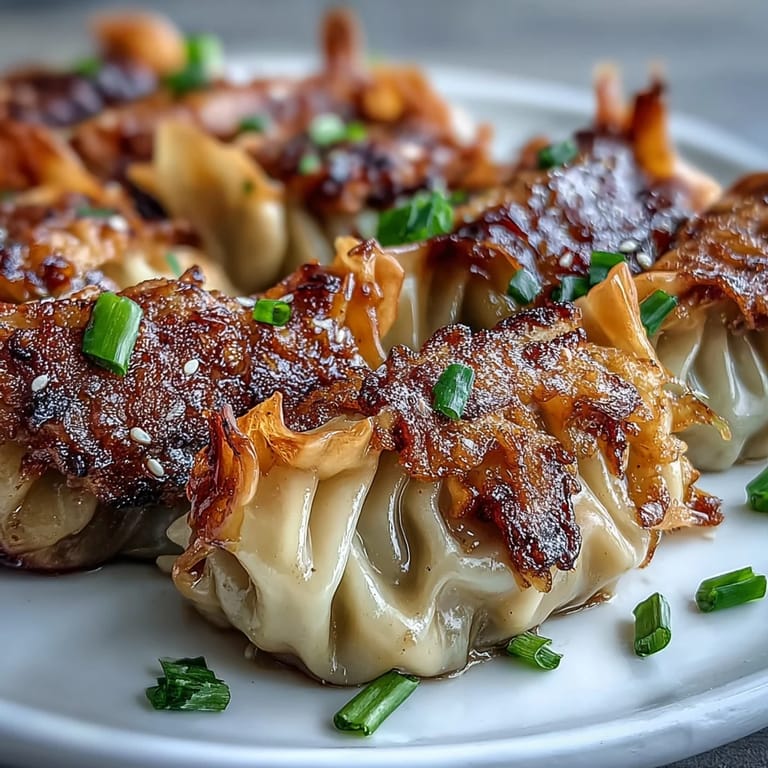
 What I love most about these gyozas is that they've become my shortcut to feeling accomplished in the kitchen without spending hours there. They're proof that good food doesn't require complicated steps, just thoughtful ingredients and a little technique.
Recipe FAQs
- → What makes smashed gyozas different from regular dumplings?
Smashed gyozas are flattened before cooking, creating more surface area for crispy bottoms while maintaining a tender, juicy filling inside.
- → Can I make these ahead of time?
Yes, assemble uncooked gyozas and freeze them in a single layer. Cook directly from frozen, adding 1-2 extra minutes to steam time.
- → What's the best way to achieve crispy bottoms?
Start with medium-high heat and enough oil to coat the pan. After steaming, remove the lid and cook for 1 minute to re-crisp the bottoms before serving.
- → Can I use other proteins?
Ground chicken, turkey, or crumbled tofu work well as alternatives. Adjust cooking time slightly for leaner meats to ensure they cook through.
- → Why steam after pan-frying?
Adding water and covering creates steam that cooks the filling thoroughly and tenderizes the wrapper while preserving the crispy bottom achieved from initial frying.