 Save Pin
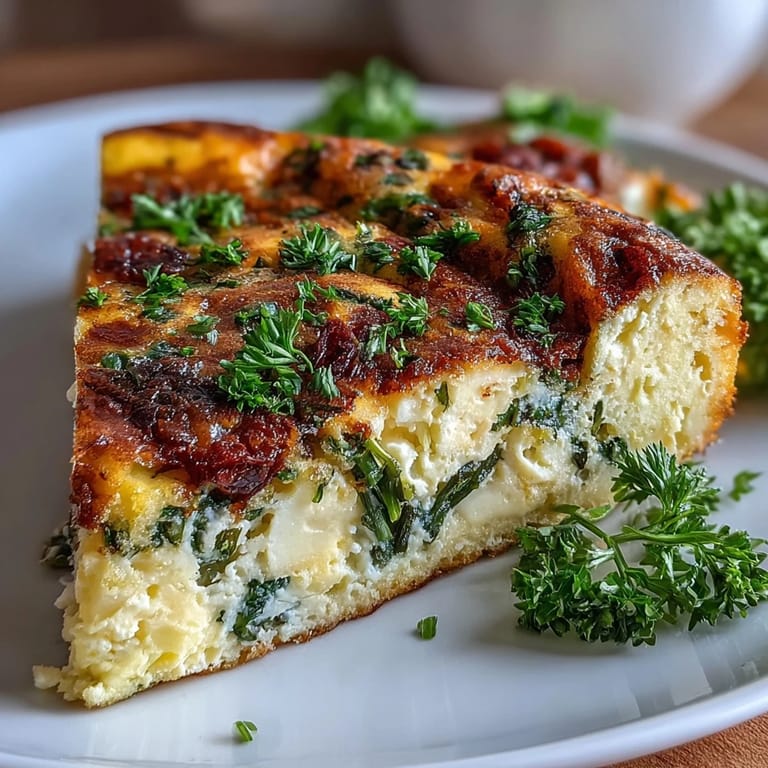
 There's something about spring that makes me want to cook with my windows open and the smell of fresh herbs filling the kitchen. My neighbor knocked on the door one Sunday morning with a bundle of asparagus from her garden, and I had a carton of eggs that needed using, so I threw together this frittata without much of a plan. What came out was so silky and bright that I've been making it ever since, especially when I want breakfast to feel like more than just breakfast.
I made this for my book club one April afternoon, and three people asked for the recipe before they'd even finished their slice. Someone said it tasted like what they imagined a fancy French bistro would serve, and I didn't have the heart to tell them it was just eggs and whatever I had in the crisper drawer. That moment stuck with me—how something so simple could feel like such a gift to share.
Ingredients
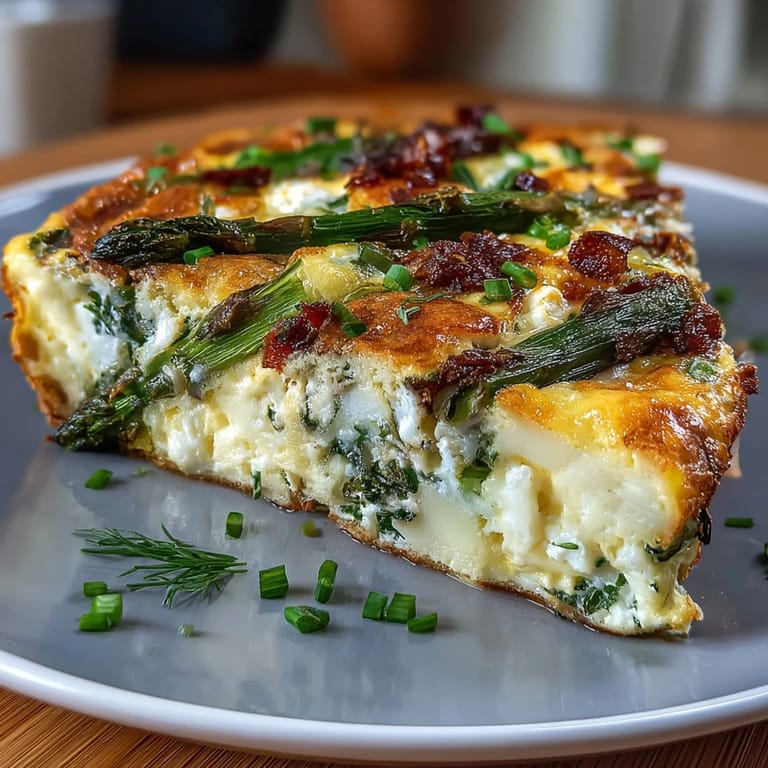
- Asparagus, about 200g trimmed and cut into 2 cm pieces: Fresh asparagus is the star here, and cutting it into smaller pieces lets it cook evenly while staying tender-crisp.
- 1 small red onion, finely chopped: Red onion adds a gentle sweetness and a bit of color; don't skip the chopping fine part because you want it soft and integrated.
- 1 cup baby spinach, roughly chopped: Spinach wilts into almost nothing but adds iron and earthiness without any drama.
- 6 large eggs: The foundation of everything—use room temperature eggs if you remember, because they whisk more smoothly.
- 1/4 cup whole milk: This keeps the frittata fluffy and tender rather than dense or rubbery.
- 100g goat cheese, crumbled: Goat cheese is tangy and creamy; crumble it by hand rather than cutting it so you get those lovely pockets of flavor throughout.
- 2 tbsp grated Parmesan cheese: Parmesan adds a salty, umami note that brings everything into focus.
- 2 tbsp fresh chives, finely sliced: Chives taste bright and onion-y without being sharp; add half to the eggs and save the rest for garnish so you get fresh flavor at the end.
- 1 tbsp fresh dill, chopped (optional): If you have dill, use it—it pairs with asparagus like they were made for each other.
- 1/2 tsp salt and 1/4 tsp freshly ground black pepper: Taste as you go; you can always add more but you can't take it out.
- Pinch of red pepper flakes (optional): A tiny bit at the end adds warmth and keeps things interesting.
- 2 tbsp olive oil and 1 tbsp unsalted butter: The combination of oil and butter gives you a better cooking temperature and a richer flavor than either one alone.
Tired of Takeout? 🥡
Get 10 meals you can make faster than delivery arrives. Seriously.
One email. No spam. Unsubscribe anytime.
Instructions
- Get your oven ready and your pan warming:
- Preheat to 180°C (350°F) and set out your ovenproof skillet—cast iron or nonstick both work beautifully. You want everything prepped before you start cooking because it moves quickly from here.
- Soften the onion until it's sweet:
- Heat olive oil over medium heat and add your red onion, stirring every so often for 2 to 3 minutes until it's soft and starting to smell really good. This step coaxes out the natural sweetness and takes away any harsh edges.
- Cook the asparagus until it's just tender:
- Add your asparagus pieces and cook for 4 to 5 minutes, giving the pan a stir now and then. You're looking for that moment when it's no longer raw but still has a little resistance when you bite it.
- Let the spinach disappear into the pan:
- Toss in your chopped spinach and cook for about a minute until it's completely wilted and dark. The volume shrinks dramatically, which always surprises people.
- Mix your eggs smooth and foamy:
- Whisk together eggs, milk, salt, pepper, and half your chives and dill in a bowl until everything is combined and the mixture looks pale and slightly frothy. This whisking step is what makes the frittata fluffy rather than dense.
- Pour and layer carefully:
- Turn the heat down to low, pour your egg mixture evenly over the vegetables, then dot the goat cheese across the top and sprinkle Parmesan over everything. The low heat matters because you want the bottom to set gently without browning too fast.
- Watch the edges set on the stovetop:
- Let it cook undisturbed for 4 to 5 minutes until you see the edges starting to firm up but the center still jiggles slightly when you gently shake the pan. This is the sign you're ready to move to the oven.
- Finish in the oven until just set:
- Transfer the skillet to your preheated oven and bake for 10 to 12 minutes until the center looks set but still looks slightly soft and creamy. The frittata continues cooking a bit from residual heat, so don't overbake or it becomes rubbery.
- Rest and garnish before serving:
- Let it sit in the pan for 5 minutes after coming out of the oven—this lets everything settle and makes it easier to slice. Scatter your remaining fresh chives and a pinch of red pepper flakes on top right before you serve.
- Slice and serve warm or at room temperature:
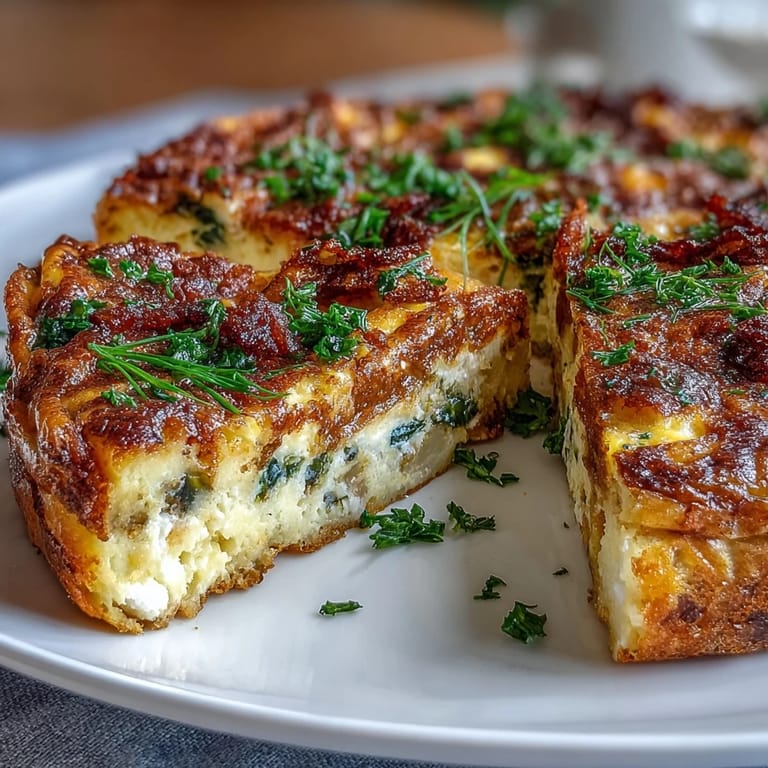
- Cut into wedges and serve it as is, or with a simple green salad and crusty bread on the side. It's just as good at room temperature, which makes it perfect for brunch or lunch the next day.
 Save Pin
 I served this to my mom one Mother's Day brunch, and she sat there quietly for a moment and then said it tasted like spring felt. I knew exactly what she meant—the brightness of the asparagus, the tang of the goat cheese, the fresh herbs making everything taste alive.
Why Spring Vegetables Matter Here
Spring asparagus has a sweetness and tenderness that disappears by summer, so there's a small window where this frittata tastes absolutely best. I've tried making it in the winter with supermarket asparagus, and while it still works, it's missing that delicate quality that makes this dish feel seasonal. The spinach and chives are also at their peak in spring, so everything comes together at the same moment to taste bright and fresh.
The Goat Cheese Makes It Sing
I used to make frittatas with just cheddar or Gruyère, and they were fine, but switching to goat cheese changed everything. The tanginess plays against the richness of the eggs and the earthiness of the vegetables in a way that feels sophisticated without being fussy. If you don't have goat cheese on hand, feta works well too, but goat cheese stays creamier when it melts and creates these lovely pockets of flavor.
Make It Work For Your Kitchen
The beauty of a frittata is that it's forgiving with substitutions and variations. You can swap in peas, leeks, or mushrooms depending on what you have and what looks good at the market. You can use ricotta instead of goat cheese, add some smoked salmon, leave out the herbs entirely if you're not a fresh herb person—the egg and cheese base is strong enough to carry whatever you want to add.
- Test your skillet in the oven first to make sure the handle is truly ovenproof, because grabbing a hot plastic handle is a mistake you only make once.
- If you don't have an ovenproof skillet, you can finish it under the broiler instead, but watch it closely because it can go from creamy to overdone in seconds.
- Leftover frittata keeps for three days in the fridge and tastes wonderful cold or gently reheated in a low oven.
 Save Pin
 This frittata has become my answer to the question of what to make when I want something that tastes celebratory but doesn't feel like work. It's proof that simple ingredients handled with care turn into something that makes people happy.
Recipe FAQs
- → Can I substitute goat cheese with other cheeses?
Yes, feta or ricotta can be used to provide a different flavor profile while maintaining creaminess.
- → What is the best way to cook the asparagus for this dish?
Trim and cut asparagus into 2 cm pieces, then sauté it until just tender to retain a pleasant texture.
- → Is this dish suitable for gluten-free diets?
Yes, all ingredients used are naturally gluten-free, but always verify cheese and milk labels if highly sensitive.
- → How do fresh herbs affect the dish's flavor?
Chives and dill add a fresh, bright note that complements the richness of the eggs and cheeses.
- → Can additional vegetables be added to enhance the dish?
Certainly, spring vegetables like peas or leeks can be incorporated for added variety and texture.