 Save Pin
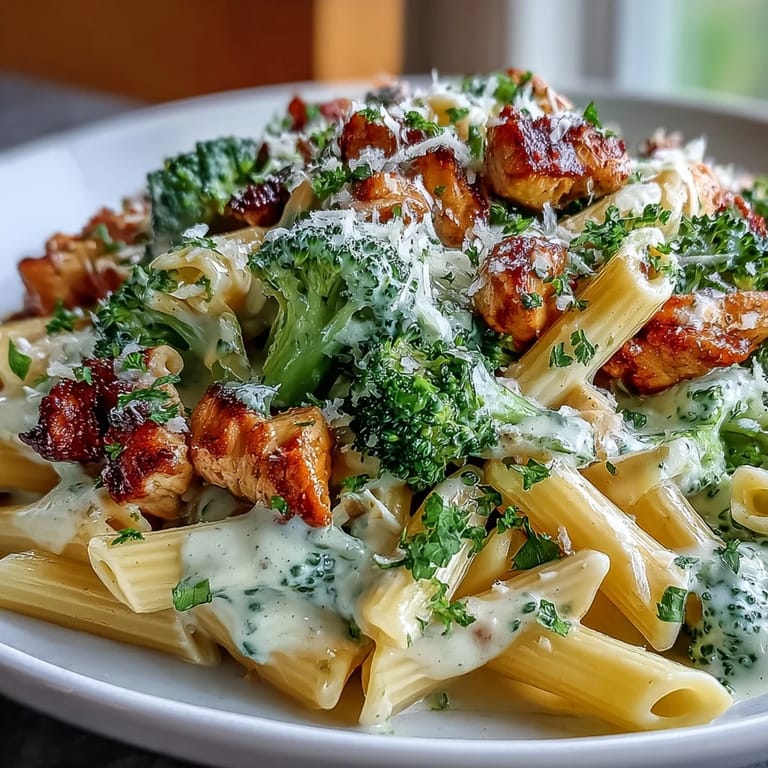
 There's something about watching cream swirl into chicken broth that makes the kitchen feel warmer, even on rushed weeknights. My friend texted me one Thursday asking for a one-pan dinner that didn't taste thrown together, and I found myself building this dish almost by accident—tossing pasta into the same skillet as golden chicken and letting everything cook together until the sauce pooled and thickened on its own. The first bite convinced us both that the best meals don't require a complicated plan, just good timing and enough Parmesan to make anyone smile.
I made this for my partner on a Tuesday when we were both too tired to order takeout but too hungry to settle for something forgettable. Watching them twirl pasta onto their fork, tasting that creamy garlic sauce coating every strand, felt like small victory in the middle of an exhausting week. That's when I realized this recipe works because it's generous without being fussy.
Ingredients
- Boneless, skinless chicken breasts: Dicing them into roughly equal pieces means they cook evenly and stay tender instead of drying out at the edges.
- Broccoli florets: Cut them slightly smaller than you think you need—they'll soften as the pasta finishes cooking, and bite-sized pieces feel better mixed throughout.
- Garlic, minced: Fresh garlic makes all the difference here; the heat coaxes out sweetness that powdered garlic just can't replicate.
- Yellow onion: It dissolves almost completely into the sauce, adding roundness without announcing itself.
- Short pasta: Penne and fusilli trap sauce in their ridges and spirals, so every forkful tastes complete.
- Whole milk and heavy cream: The milk stretches the cream and prevents the sauce from becoming too heavy, while the cream gives it that silk.
- Grated Parmesan cheese: Buy a wedge and grate it yourself if you can—pre-grated versions have anti-caking agents that make the sauce grainy.
- Butter: Two tablespoons seems modest, but it's the foundation for sautéing chicken and building flavor in the first few minutes.
- Chicken broth: Low-sodium lets you control the salt and prevents the finished dish from tasting like a salt lick.
- Italian herbs: Dried oregano, basil, and thyme work here, or use a bottled blend you already trust.
- Olive oil: It partners with butter to keep chicken from sticking and adds its own subtle warmth to the early cooking stages.
Tired of Takeout? 🥡
Get 10 meals you can make faster than delivery arrives. Seriously.
One email. No spam. Unsubscribe anytime.
Instructions
- Get the chicken golden:
- Heat olive oil and butter together over medium heat until the butter foams, then add your diced chicken with a pinch of salt and pepper. You want to hear it sizzle gently; if it's too loud, the heat's too high and the outside will burn before the inside cooks through. Let it sit for a minute or two before stirring—this is how you get that light golden crust that tastes intentional.
- Build your flavor base:
- Once the chicken's cooked through, push it to the side and add onion to the same pan. The brown bits clinging to the bottom are pure flavor; let the onion soften and turn translucent before adding garlic. Thirty seconds of garlic sizzling is all you need—any longer and it'll taste bitter instead of sweet.
- Cook pasta together:
- Pour in uncooked pasta, chicken broth, milk, and herbs without draining anything first. This is the unconventional part that makes it work; the pasta absorbs the liquid as it cooks and releases starch into the sauce, thickening it naturally. Once it comes to a boil, lower the heat, cover it, and stir every couple of minutes so nothing sticks to the bottom.
- Add broccoli at the right moment:
- After eight minutes, when the pasta is already softening, stir in broccoli and cover again for five to six more minutes. The broccoli steams above the liquid and in the steam created by the covered skillet, staying bright green instead of turning muddy. When you lift the lid, you should smell garlic and cheese, not sulfur.
- Finish with cream and cheese:
- Lower the heat to medium-low before stirring in heavy cream and Parmesan, since high heat can break the cream and make it grainy. Stir constantly for a minute until the cheese melts and pulls everything into a silky sauce. Return the chicken, cook two more minutes to warm it through, and taste before seasoning.
 Save Pin
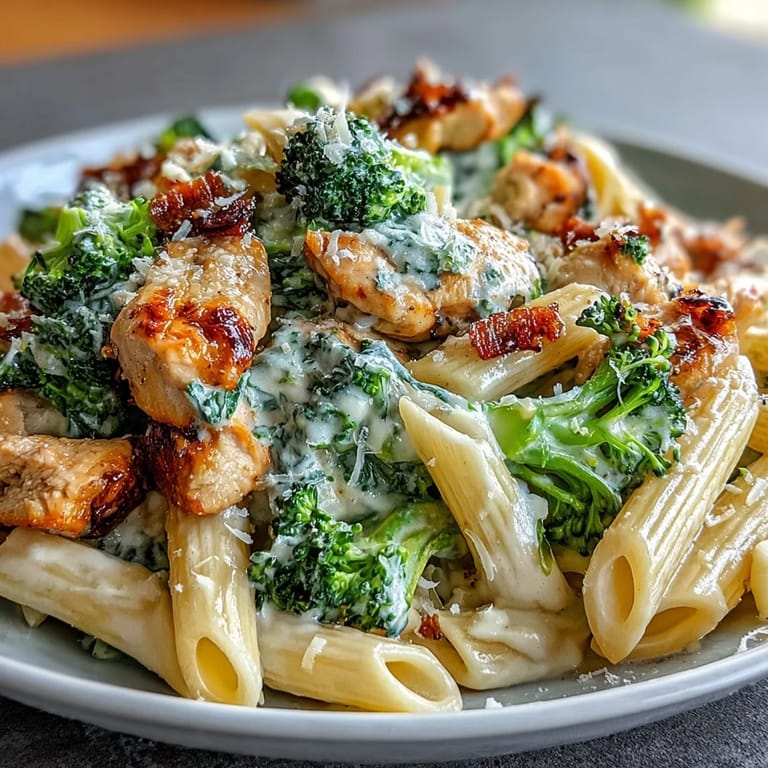
 There was a night I made this for three friends who'd helped me move, and we sat around the table passing the skillet around, each person serving themselves seconds before it had even cooled. That's when I knew the recipe worked—not because the sauce was perfectly creamy or the broccoli cooked perfectly, but because it made people linger instead of rushing back to their lives.
Why One-Skillet Cooking Changes Everything
One-skillet meals aren't just about fewer dishes to wash, though that's certainly nice. There's something about cooking everything in one place that means the flavors build on each other—the browned bits from the chicken stay in the pan and flavor the sauce, the starch from the pasta thickens everything naturally, and every element tastes connected rather than separate. It's the cooking method that makes this dish feel intentional instead of assembled.
Timing and Temperature Matter More Than Exact Measurements
I've made this recipe with slightly less cream and slightly more broth, and it still worked because I adjusted based on how the sauce looked and tasted. The real skill is watching your pan—if the sauce seems too thin when the pasta finishes, let it simmer uncovered for a minute to reduce. If it seems too thick, splash in a bit of broth or milk. Temperature matters too; medium heat gives you time to think and adjust, while high heat moves too fast and forces you to rescue something that's already burning.
Make It Your Own
The beauty of this formula is how flexibly it adapts to what you have on hand or what you're craving. Rotisserie chicken works perfectly if you'd rather skip the initial sauté step, and frozen broccoli thaws quickly in the hot pan without sacrificing much. Spinach, peas, or diced zucchini all play nicely here, and if you prefer a lighter sauce, use half-and-half instead of heavy cream or skip the cream entirely and rely on more Parmesan for richness.
- Fresh herbs like basil or parsley stirred in at the end taste brighter than dried Italian herbs alone.
- A squeeze of fresh lemon juice right before serving cuts through the richness and makes people taste the garlic more clearly.
- If you're serving it with wine, a crisp Pinot Grigio or Sauvignon Blanc will echo the garlic and cream without competing.
 Save Pin
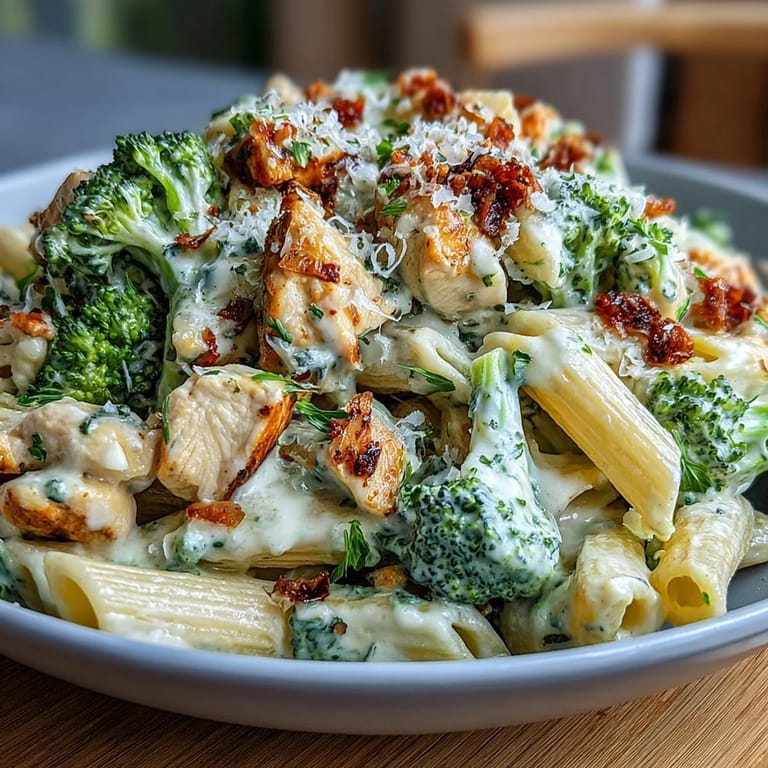
 This recipe proves that weeknight cooking doesn't have to be a compromise between speed and flavor. Make it once, and you'll find yourself returning to it whenever you need comfort that doesn't require fussing.
Recipe FAQs
- → Can I use pre-cooked chicken for this dish?
Yes, rotisserie chicken or leftover cooked chicken works perfectly. Add it during the final 2 minutes of cooking to heat through rather than sautéing at the beginning.
- → What pasta shapes work best?
Short pasta varieties like penne, fusilli, or rotini are ideal because their shapes catch the creamy sauce. Avoid long strands like spaghetti as they're difficult to manage in skillet cooking.
- → How do I store leftovers?
Store cooled pasta in an airtight container in the refrigerator for up to 3 days. Reheat gently with a splash of milk or broth to restore creaminess.
- → Can I make this gluten-free?
Substitute gluten-free pasta and ensure all ingredients, particularly the chicken broth and Italian herbs, are certified gluten-free. The sauce will still be creamy and delicious.
- → What vegetables can I substitute for broccoli?
Fresh spinach, peas, asparagus pieces, or diced bell peppers work wonderfully. Add quicker-cooking vegetables like spinach during the last 2-3 minutes to prevent overcooking.
- → Why cook pasta directly in the skillet?
Cooking pasta in the broth and milk allows the noodles to absorb flavor and releases starch into the liquid, naturally thickening the sauce for a velvety texture without extra flour.