 Save Pin
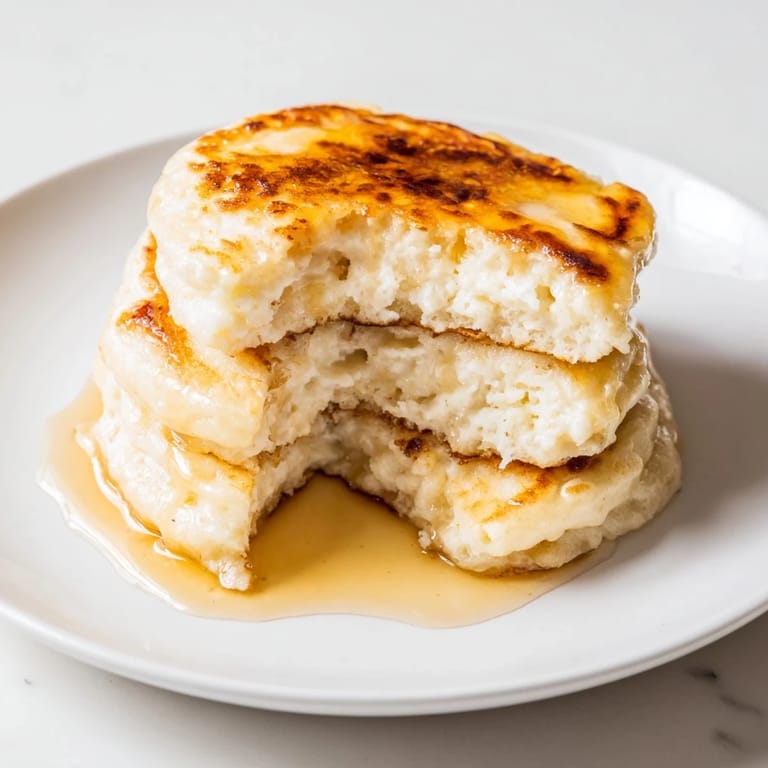
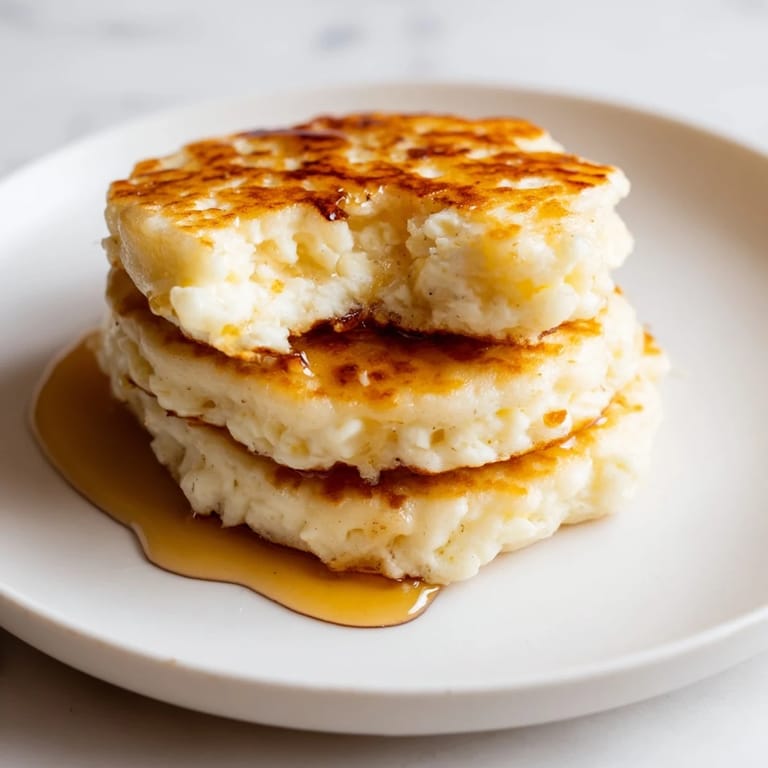
 There's something about cottage cheese that catches people off guard in a pancake. When my neighbor pressed a plate of these into my hands on a Sunday morning, I was skeptical—until that first bite revealed a texture somewhere between cloud and custard, so impossibly tender it felt like the batter had been whispered into existence. The tang of the cheese doesn't compete with sweetness; instead, it hides underneath like a secret ingredient everyone tastes but no one can name. Now I make these whenever I want breakfast to feel a little less ordinary, a little more like someone who knows what they're doing in the kitchen.
I tested this recipe on a Saturday when my partner had just come back from the farmer's market with fresh berries and local honey. Watching their face go from polite curiosity to actual delight as they cut into the second pancake told me everything I needed to know—this was going into permanent rotation. The kitchen smelled like vanilla and butter, and for once, nobody was waiting impatiently for breakfast to finish.
Ingredients
- Cottage cheese (1 cup full-fat or low-fat): This is the whole trick—it breaks down during blending to create an impossibly light crumb while adding real protein and that subtle tang that makes people wonder what you did differently.
- Eggs (3 large): They're the glue that holds everything together and brings richness; don't skimp or use smaller eggs or your batter will be loose and sad.
- Milk (1/4 cup): Just enough to loosen the batter to a scoop-able consistency without making it runny.
- All-purpose flour (3/4 cup): Measure by weight if you have a scale, or spoon and level—too much flour and your pancakes become dense.
- Sugar (1 tbsp), baking powder (1/2 tsp), salt (1/4 tsp): These three work together to lift the batter and balance the savory tang of the cheese.
- Vanilla extract (1 tsp): A small amount that rounds out the flavor without making these taste like dessert.
- Butter or neutral oil (2 tbsp for cooking): Butter tastes better, but if your pan runs hot, oil won't burn as easily.
Tired of Takeout? 🥡
Get 10 meals you can make faster than delivery arrives. Seriously.
One email. No spam. Unsubscribe anytime.
Instructions
- Blend the wet base:
- In a large bowl, whisk together the cottage cheese, eggs, milk, and vanilla until the mixture looks smooth and pourable—a few tiny curds are actually fine and add character. This step takes about two minutes of actual whisking.
- Mix the dry ingredients:
- In another bowl, whisk together flour, sugar, baking powder, and salt so everything is evenly distributed; this prevents pockets of baking powder that taste bitter.
- Combine gently:
- Pour the wet mixture into the dry ingredients and stir until just barely combined—the batter should look slightly lumpy and thick, not smooth. Overmixing develops gluten and makes pancakes tough instead of tender.
- Heat your cooking surface:
- Place a nonstick skillet or griddle over medium heat and let it warm for a minute until a drop of water sizzles gently; too hot and the outsides burn while the insides stay raw.
- Cook the first side:
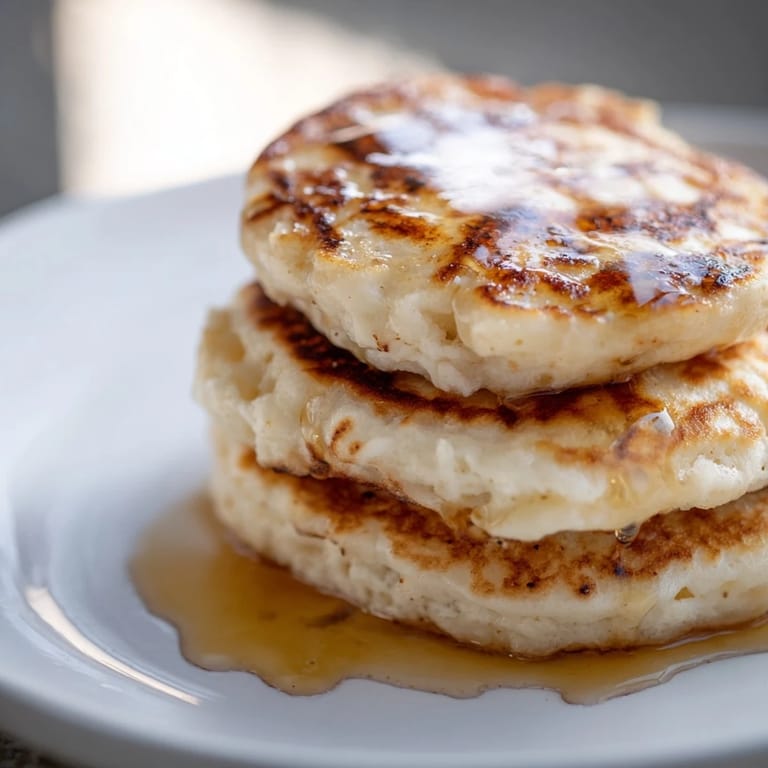
- Add a little butter or oil, then scoop about 1/4 cup of batter per pancake and let it sit without touching it for 2 to 3 minutes. You'll see bubbles form across the surface and the edges will start to look set and slightly dry—that's your signal to flip.
- Finish cooking:
- Flip gently and cook for another 1 to 2 minutes until the bottom is golden and the pancake springs back slightly when pressed. Don't flip more than once or you'll deflate the whole thing.
- Keep warm and serve:
- Transfer finished pancakes to a plate and cover loosely with foil while you cook the rest, adding more butter or oil to the pan as needed between batches.
 Save Pin
 The moment I understood why cottage cheese pancakes work is the moment I stopped trying to hide the tang. A friend eating these asked what made them different, and I realized the subtle sourness wasn't something to apologize for—it was the whole point, the thing that made them taste like breakfast instead of cake. That's when these stopped being a recipe and became breakfast that I actually wanted to eat.
Why This Works as a Protein-Packed Breakfast
Most pancakes are refined carbs dressed up with syrup, which is fun but leaves you hungry by mid-morning. These pancakes flip that equation: the cottage cheese and eggs bring real protein and fat that keeps you satisfied, while the flour is really just structural support rather than the main event. It's the kind of breakfast that actually functions as fuel instead of just comfort, which somehow makes it taste even better.
Adaptations Worth Trying
Once you understand how these work, the variations become obvious. A pinch of cinnamon or grated lemon zest melts into the batter and adds complexity without changing the technique. Swapping some or all of the all-purpose flour for whole wheat works beautifully if you like a slightly earthier flavor and don't mind marginally denser pancakes. I've even added a handful of blueberries directly to the batter, though they'll sink unless you coat them lightly in flour first.
Storage and Reheating
These pancakes actually freeze remarkably well, which means you can make a double batch on a lazy Sunday and have ready-made breakfasts waiting in the freezer. I layer them between parchment paper so they don't stick together, then pop them in a bag. A toaster or quick pass in a skillet brings them back to something that tastes almost freshly made, though they'll never quite recover their original fluffiness—but that's fine because cold pancakes with almond butter and honey for dipping are their own kind of perfect.
- Store cooled pancakes in an airtight container in the fridge for up to three days.
- Freeze for up to a month and reheat in a toaster or skillet—no thawing needed.
- Leftover batter keeps in the fridge for a day, though it thickens slightly as the flour hydrates.
 Save Pin
 Breakfast shouldn't require apologies or explanations, just a simple recipe that tastes good and makes you feel capable. These pancakes are that.
Recipe FAQs
- → What gives these pancakes their tender texture?
The addition of creamy cottage cheese adds moisture and a subtle tang, resulting in a tender and fluffy finish.
- → Can I use low-fat cottage cheese instead of full-fat?
Yes, both full-fat and low-fat cottage cheese work well, though full-fat offers a richer flavor and texture.
- → How do I prevent the batter from overmixing?
Mix the dry ingredients into the wet mixture until just combined; small lumps are ok to preserve tenderness.
- → What are good toppings to serve with these pancakes?
Fresh fruit, honey, maple syrup, or a sprinkle of cinnamon complement the mild flavor perfectly.
- → Can these pancakes be prepared ahead of time?
Yes, they freeze well and can be reheated in a toaster or skillet for quick enjoyment later.
- → Is it possible to make a heartier version?
Substitute whole wheat flour for all-purpose flour to add a nutty flavor and more fiber.